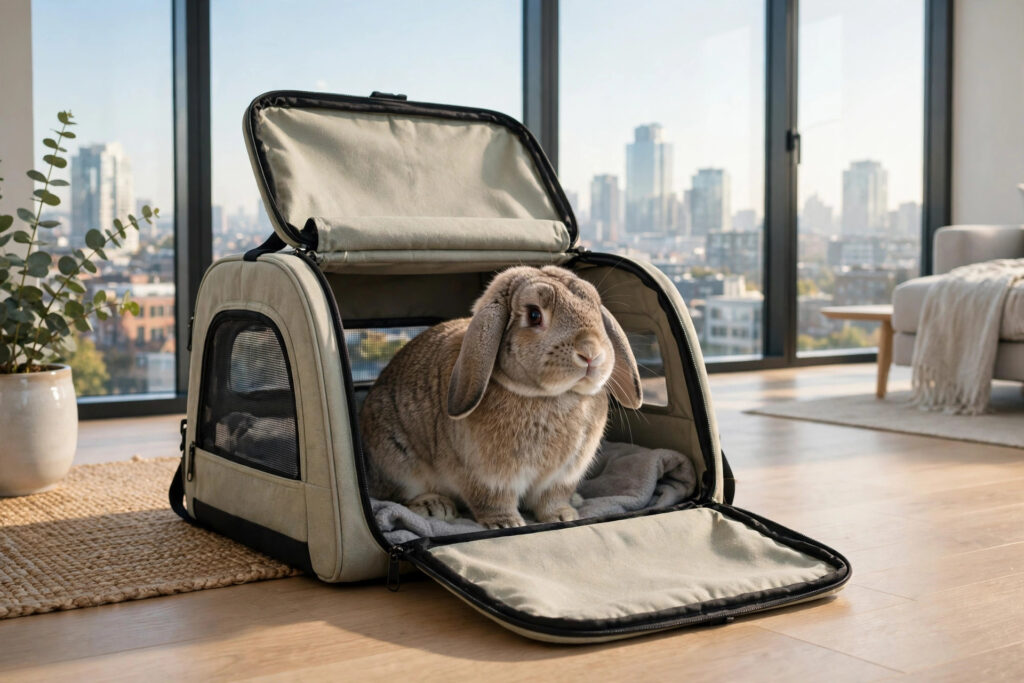
Travelling with a rabbit on a short trip works best when you keep it simple: a secure, hay-lined carrier, a calm car cabin, and a quiet setup waiting at the other end. Pack food and water, plan breaks, and let your rabbit settle before you handle them.
Why short trips feel big to a small rabbit
A 40-minute drive might feel like nothing to you. To a rabbit, it’s a full change of smells, sounds, and footing.
Rabbits are prey animals, so new movement and unfamiliar noise can spike stress fast. That doesn’t mean you can’t travel. It just means the prep matters more than the distance.
Short trips are actually the best place to start. A vet visit, a weekend at a friend’s place, or a move across town lets you practice the routine without a long, tiring day.
Pick a carrier your rabbit actually likes
Skip the cardboard box and the flimsy tote. You want a hard-sided or sturdy soft-sided carrier with a secure door, good airflow, and a flat, non-slip base.
Top-opening carriers help a lot here. You can lift your rabbit in gently instead of pulling them out through a front door, which feels much less scary for them.
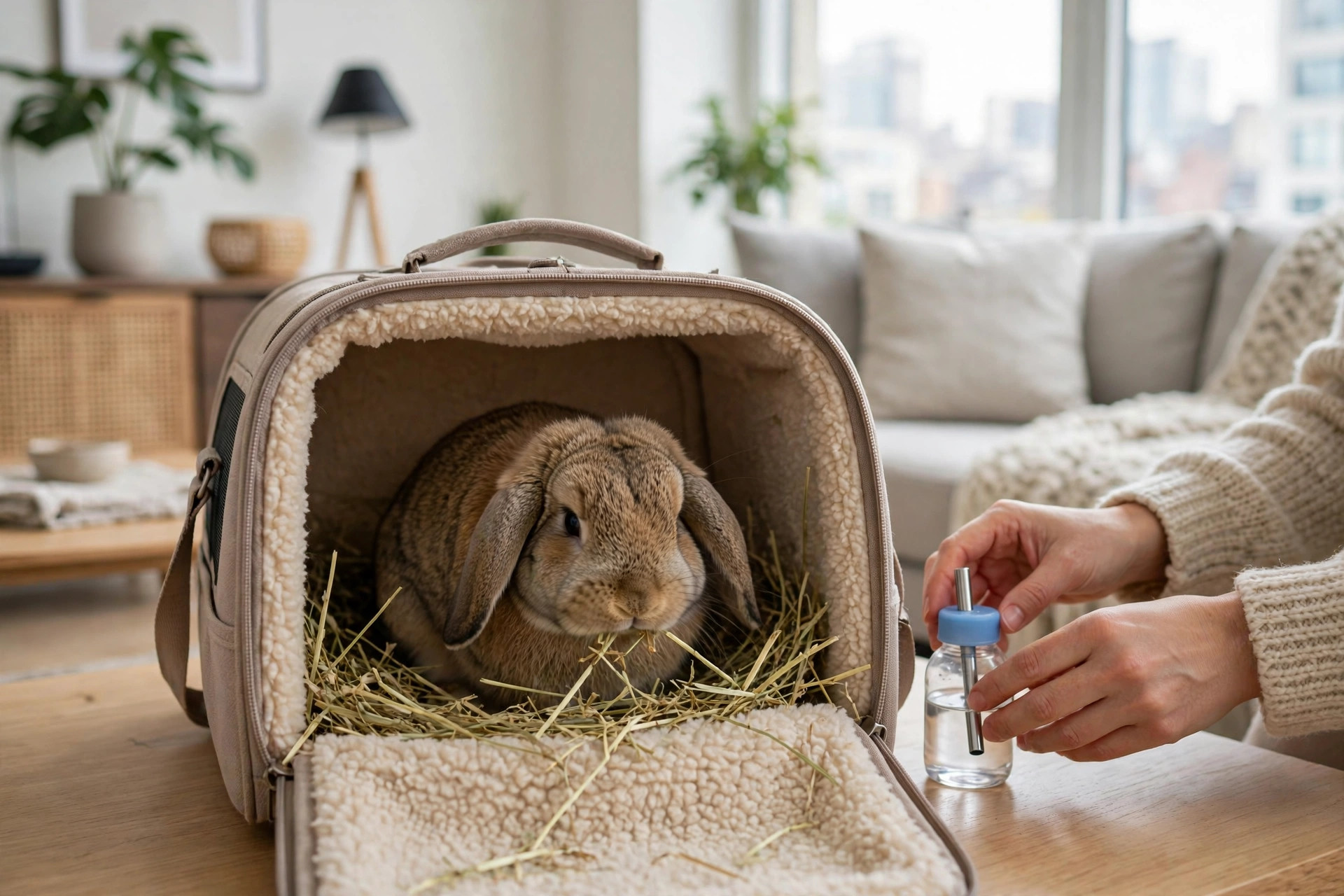
Line the bottom with a towel or fleece your rabbit already knows. Add a generous handful of hay. If it smells like home, you’re already halfway there.
Size, ventilation, and security checks
Your rabbit should be able to sit up, turn around, and stretch out flat. If they can’t flop comfortably, the carrier is too small for anything beyond a very quick ride.
Check the latches twice. Holland Lops are compact, but they’re strong kickers, and a loose door can pop open if the carrier tips or gets bumped in the car.
Look for mesh or vents on at least two sides. Airflow keeps the carrier from getting stuffy, and it lets your rabbit see out without feeling fully exposed.
Make the carrier feel familiar before travel day
Don’t bring the carrier out only on travel day. Leave it open on the floor for a few days beforehand, with hay and a favorite leafy green tucked inside.
Let your rabbit hop in and out on their own terms. No closing the door, no lifting, no fuss. You’re just building a simple idea: this box is safe, and sometimes it has snacks.
Once they’re going in willingly, close the door for a minute or two, then open it again. Build up slowly. A few calm practice rounds beat one stressful surprise every time.
What to pack for a short rabbit trip
Keep it light, but don’t skip the basics. Your rabbit needs hay within reach at all times, because rabbits need to keep eating to keep their digestion moving.
Pack their usual pellets and greens in small portions, not a brand-new food. Travel day is not the day to test a different diet, however fun the new bag looks at the shop.
Bring water in a spill-proof bottle or a heavy, low bowl you can offer during stops. Add a spare towel, paper towels for quick cleanups, and a small litter tray if you’ll be out for more than a couple of hours.
A quick pack list that covers most trips
Hay comes first, always. Then water, a portion of familiar food, a spare liner for the carrier, and something that smells like home, like a small fleece or a favorite chew toy.
Toss in your vet’s number and a note of what your rabbit ate that morning. If plans change or you need help on the road, that little bit of info saves time.
That’s it. You don’t need a huge kit for a short trip, just the right few things in easy reach.
The car setup that keeps rabbits calm
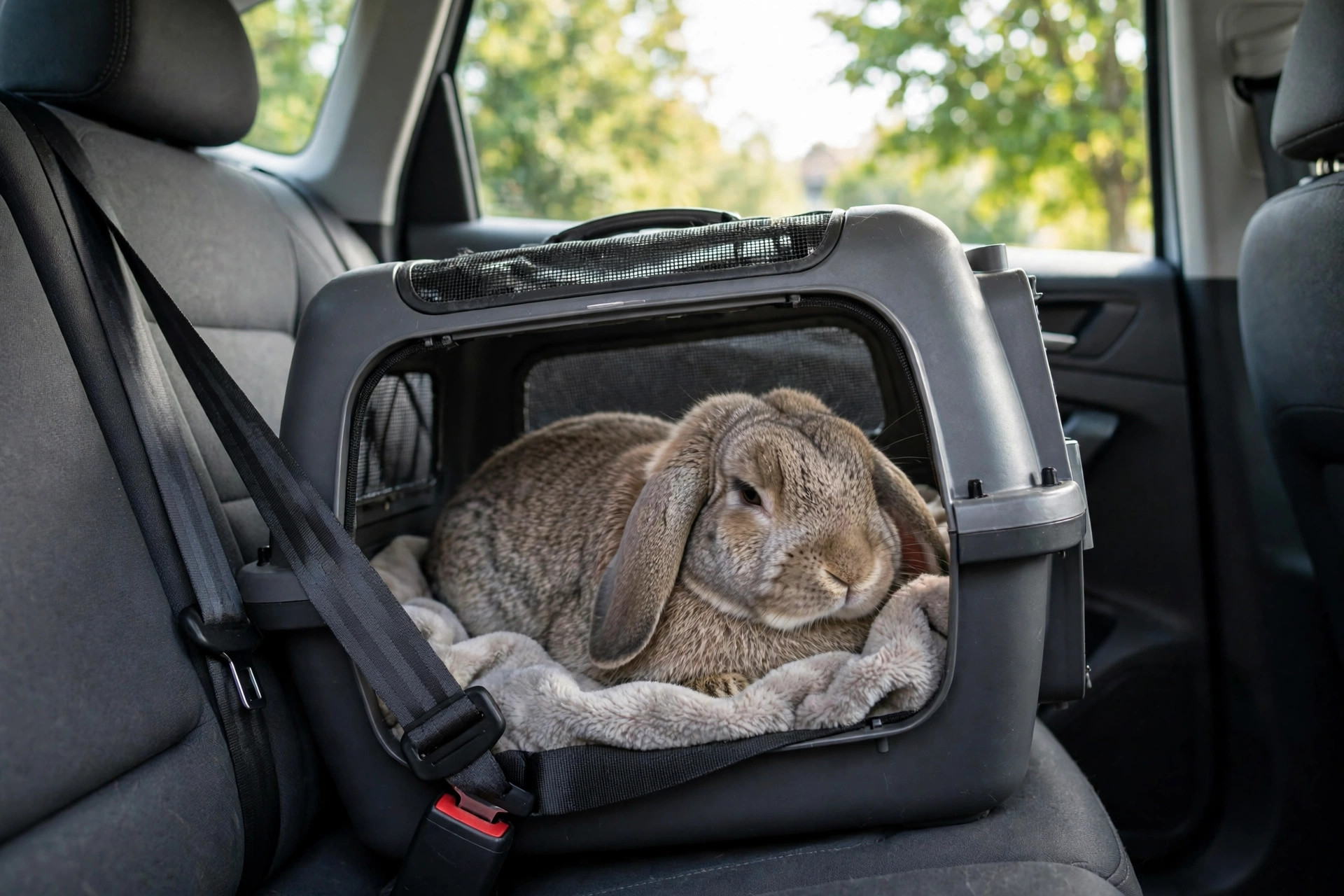
Place the carrier on a flat seat or in a footwell where it won’t slide. Strap it in with a seatbelt if you can, or wedge it securely so a gentle turn doesn’t send it shifting.
Never put a rabbit in the trunk or boot. There’s no airflow, temperatures swing fast, and your rabbit is alone with loud road noise and exhaust fumes nearby. The cabin is the only safe spot.
Cover part of the carrier with a light blanket if your rabbit seems overwhelmed. Leave one side open for air. Some rabbits relax in dim light, others prefer to watch, so adjust to yours.
Temperature, noise, and ride style
Keep the cabin moderate — not hot, not icy. Rabbits handle cool air better than heat, and a stuffy car can cause trouble quickly, so crack a window or run gentle air conditioning if the day is warm.
Keep music low and skip sudden loud sounds. Talk normally if you like. A steady, familiar voice is often more settling than total silence.
Drive smoothly. Slow turns, gentle braking, no sharp lane changes if you can avoid them. Your rabbit feels every jolt, so a boring drive is a good drive.
Your trip day, step by step
A simple timeline takes the guesswork out of the morning. Here’s a rhythm that works for most short trips, whether you’re heading out in the morning or later in the day.
- Two hours before you leave — morning prep: Top up hay, offer fresh water and a normal breakfast of greens. Let your rabbit move around and use the litter tray as usual.
- One hour before — carrier time: Set the carrier out open with hay inside. Let your rabbit hop in on their own if they’ll do it, or lift them in gently with both hands supporting their chest and hindquarters.
- Thirty minutes before — final checks: Close and latch the door, check water and spare supplies are packed, and load everything else into the car first so the rabbit is the last one in.
- The drive: Place and secure the carrier, set a comfortable cabin temperature, and drive smoothly. For trips over an hour, stop somewhere quiet to offer water and check the hay.
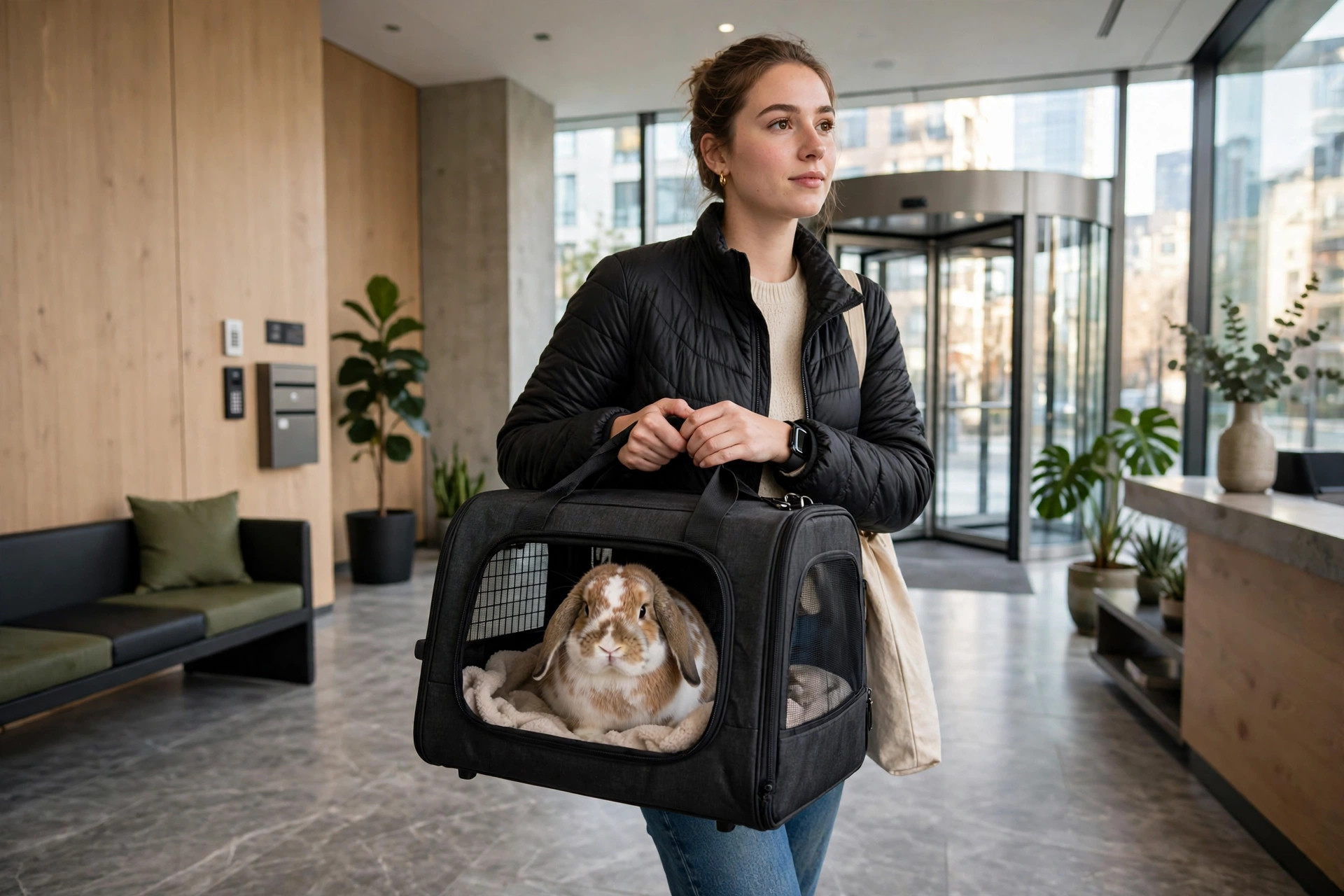
- Arrival: Carry the carrier inside first, set it down in a quiet spot, and open the door. Let your rabbit come out when they’re ready, not on your schedule.
Timelines aren’t rules. If your rabbit needs more time at any step, take it. A ten-minute delay now is cheaper than a stressed rabbit all afternoon.
The drive itself: what to watch for
A settled rabbit will sit quietly, nibble hay now and then, and maybe wash their face. That’s a good sign. They’re coping.
Watch for heavy panting, drooling, constant thumping, or a rabbit pressed flat and frozen with wide eyes for a long stretch. Those are stress signals. Pull over somewhere safe, check temperature and airflow, and offer water.
Don’t open the carrier on the move or let your rabbit ride loose in the car. A startled rabbit can bolt, get under pedals, or injure themselves in a sudden stop. Loose in the cabin is never the safer option.
Breaks on slightly longer short trips
For a drive of an hour or two, one quiet stop is usually enough. Park in shade, keep doors closed, and offer water inside the carrier rather than taking your rabbit out.
Skip the grassy photo break. Unknown ground can carry pesticides or other animals’ waste, and a loose rabbit outdoors can disappear in seconds.
Five calm minutes, a sip of water, a hay check, and you’re back on the road. Keep breaks boring and brief.
Arriving calm, not chaotic
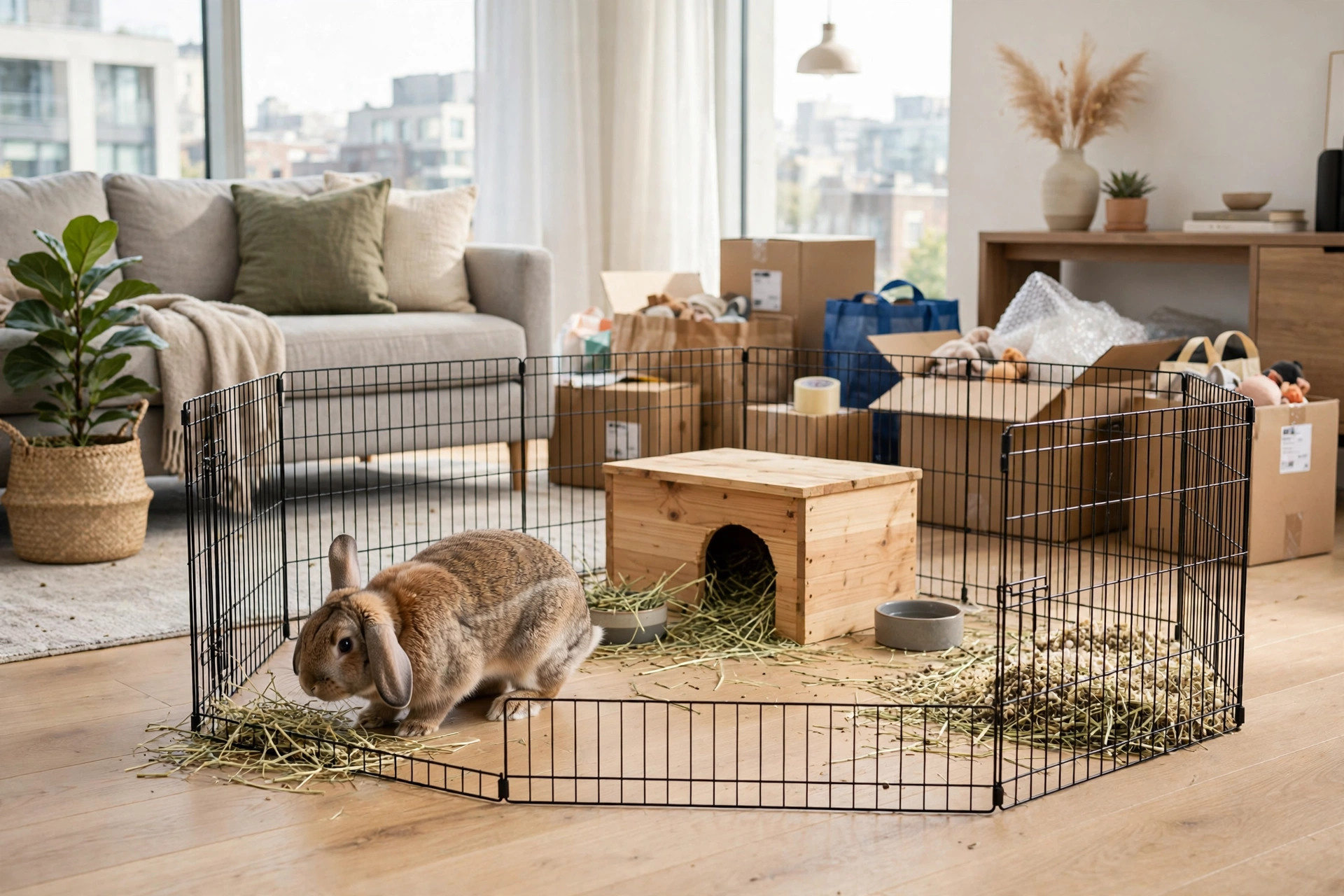
The destination matters as much as the drive. Set up a small, quiet corner before you open the carrier: litter tray, hay, water, and a hidey spot like a box or a covered crate.
Keep other pets and excited visitors out of that space at first. Your rabbit doesn’t need a welcome party. They need quiet, food, and time to map the new room.
Let them explore one room before the whole place. A smaller space feels manageable, and you’ll spot hazards like cables, gaps behind furniture, and open doors much faster.
The first hour at your destination
Offer hay and water right away, even if your rabbit doesn’t eat at once. Just having food close by helps them settle, and most rabbits start nibbling once the room goes quiet.
Check that they’re eating, drinking, and passing droppings within a few hours. A rabbit who won’t eat at all after travel needs a vet call, because rabbits shouldn’t go long without food.
Keep handling gentle and brief for the first evening. There’ll be time for cuddles tomorrow. Tonight, quiet company is the kindest thing you can offer.
If your rabbit really hates the car
Some rabbits never love travel, and that’s okay. Your job isn’t to make them enjoy it. It’s to make necessary trips as short and calm as you can.
For very anxious rabbits, talk to your vet before a planned trip. They can check for pain or health issues that make travel harder, and they’ll tell you if a trip should be postponed.
And ask the honest question: does your rabbit need to come at all? For a weekend away, a trusted sitter who visits your home might be the kinder plan, so your rabbit stays in familiar territory while you enjoy your trip.
Rabbit travel questions, answered
How long can a rabbit stay in a carrier?
For short trips, a carrier is fine for the drive itself, plus a little time either side. If you’ll be out for many hours, plan stops to offer water and hay, and give your rabbit time out of the carrier in a safe, enclosed space at your destination. A carrier isn’t a home for the day.
Should I feed my rabbit before a car trip?
Yes, feed as normal. Rabbits need to keep eating hay to keep their digestion working, so don’t withhold food before travel. A normal breakfast, hay in the carrier, and water on offer is the right setup. Avoid introducing any new food on travel day.
Can my rabbit travel on my lap instead of in a carrier?
No, a carrier is safer every time. A lap rabbit can bolt at a sudden noise, fall during a stop, or get hurt if the car brakes hard. In a secure carrier on a flat surface, your rabbit is protected and you can focus on driving.
What if my rabbit won’t eat after we arrive?
Give them quiet, hay, water, and a hidey spot, then watch closely for a few hours. Many rabbits eat once things calm down. If your rabbit still hasn’t eaten or passed droppings after several hours, call a vet for advice — don’t wait until the next day.
This article was created with AI assistance and reviewed by our editorial team before publishing.
 Road Trips With a Cat: A Calm Travel Guide
 Flying With Your Dog: Cabin vs. Cargo, Explained
 Apartment Living With a Parrot: Noise, Space, Neighbours