
If you’re flying with your dog, your dog’s size makes the first call: small dogs usually ride in the cabin under your seat in an airline-approved carrier, while bigger dogs travel as checked baggage in a crate that meets IATA’s Live Animals Regulations. Book the pet spot before you buy the ticket, get your dog comfortable in the carrier weeks ahead, and sort the paperwork early.
Flying with a dog isn’t really complicated — it’s just bureaucratic. The rules differ by airline, route, and the size of your dog, which is why most people’s first flight together feels like a research project. It doesn’t have to. Here’s the whole thing, laid out in the order that actually matters.
First, figure out where your dog rides
There are really only two places a dog can go on a plane: under the seat in front of you, or in the heated, pressurized cargo hold.
Which one applies to your dog comes down to size, and the line is drawn lower than most people expect. If your dog can stand up, turn around, and lie down in a carrier that fits under a standard airline seat, the cabin is on the table. Most airlines set their in-cabin limit somewhere around 8 kg including the carrier — the exact number varies by carrier and even by aircraft, so the only number that counts is the one on your airline’s pet policy page.
Everyone else goes in the hold. That sentence scares people, so let’s say it plainly: the cargo hold on passenger aircraft is pressurized and temperature-controlled — it’s the same air you’re breathing. It is not the luggage carousel zone. Dogs fly in the hold every single day, and the airlines that accept them have detailed procedures for it, governed by IATA’s Live Animals Regulations — the industry rulebook most carriers follow (IATA’s live animals program).
Cabin travel: the small-dog advantage
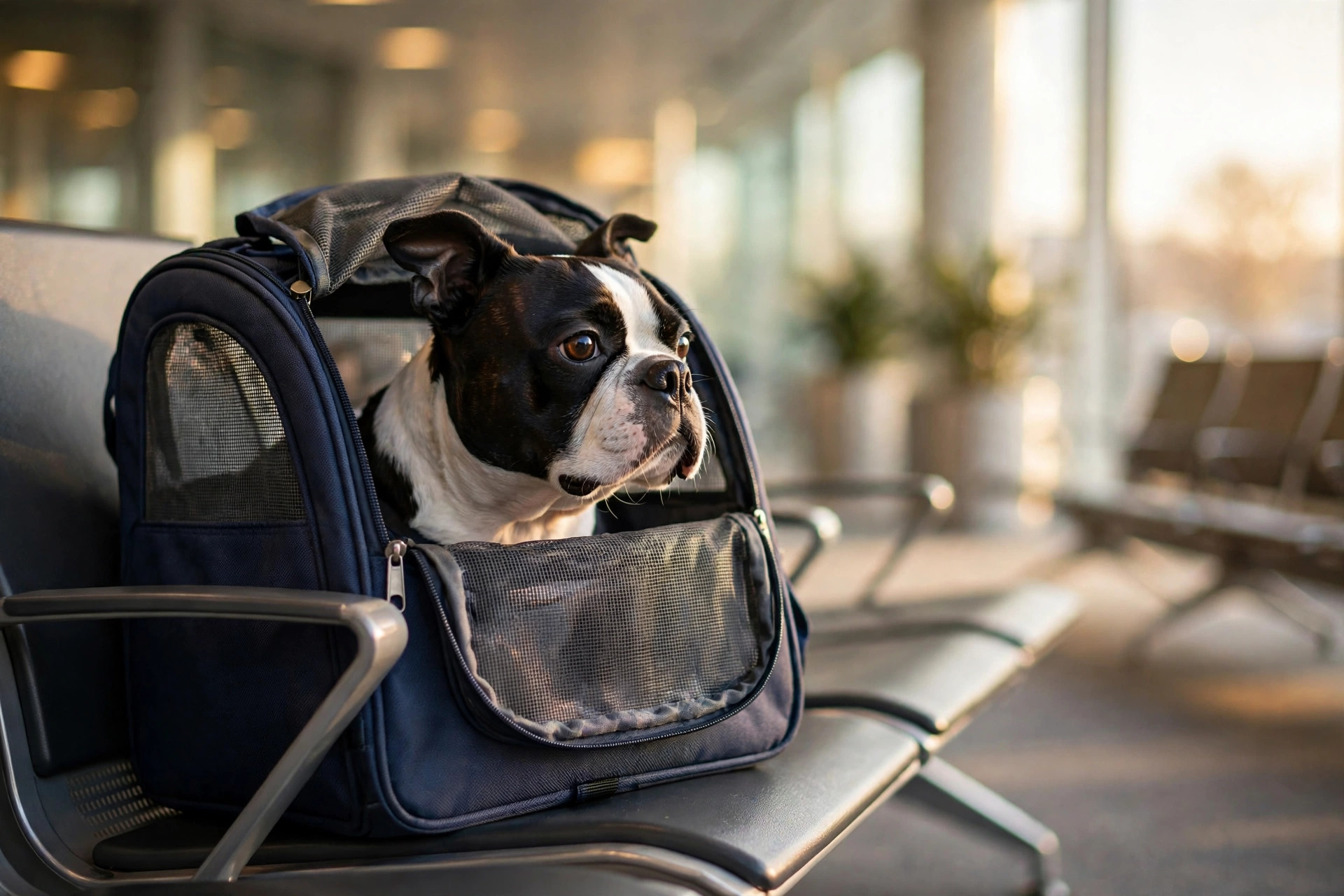
If your dog fits, take the cabin every time. You keep your dog with you, feeding and water breaks are your call, and you skip the entire crate-in-the-hold logistics chain. But “small enough” is a strict test, and airlines do enforce it at check-in.
- The carrier matters more than the dog. It must fit under the seat in front of you, which means roughly 40–45 cm long on most aircraft — and that also varies. Soft-sided carriers are the move: they compress slightly where hard cases don’t, and most airlines explicitly prefer or require them for cabin pets.
- Book the pet spot first. Airlines cap the number of in-cabin pets per flight — often just two to four. Call the airline or book through the pet-travel option before you buy your own ticket, because the cheapest fare on a full pet quota is a fare you can’t use.
- Expect a flat pet fee. In-cabin pet fees are a separate line item from your ticket. They’re priced like a service, not a seat — think service-fee territory, not second-ticket territory — and you’ll pay it at booking or check-in depending on the airline.
- The carrier stays shut. During the flight your dog stays in the carrier, stowed under the seat, for the whole trip. If your dog can’t settle in a closed carrier for a few hours, cabin travel will be a long day for both of you — which is exactly why the training section below exists.
Cargo: how big-dog flights actually work
For medium and large dogs, the hold is the standard — and honestly, the routine option. The crate must be rigid, well-ventilated on at least three sides, and sized so your dog can stand, turn, and lie down naturally. IATA’s regulations specify the construction, and airlines do refuse crates that don’t meet them, so measure your dog and size up from borderline.
A few things people learn the hard way:
- Flat-faced breeds are often refused outright. Bulldogs, pugs, boxers, and other brachycephalic breeds face extra heat and breathing risks in transit, and many airlines won’t accept them in the hold at all — some won’t take them in the cabin either. If you have a short-nosed dog, confirm acceptance with the airline before doing anything else.
- Summer and winter have blackout windows. Airlines impose temperature embargoes — typically no hold travel when ground temperatures at either end are expected to exceed roughly 29°C or drop below about 7°C. Check the seasonal policy for your route; it’s published on the airline’s pet page.
- Direct flights are worth real money. Every connection is another loading, another wait on a tarmac cart, another handoff. If a direct flight costs more, that’s the one. Your dog doesn’t care about your layover savings.
The crate is the whole game
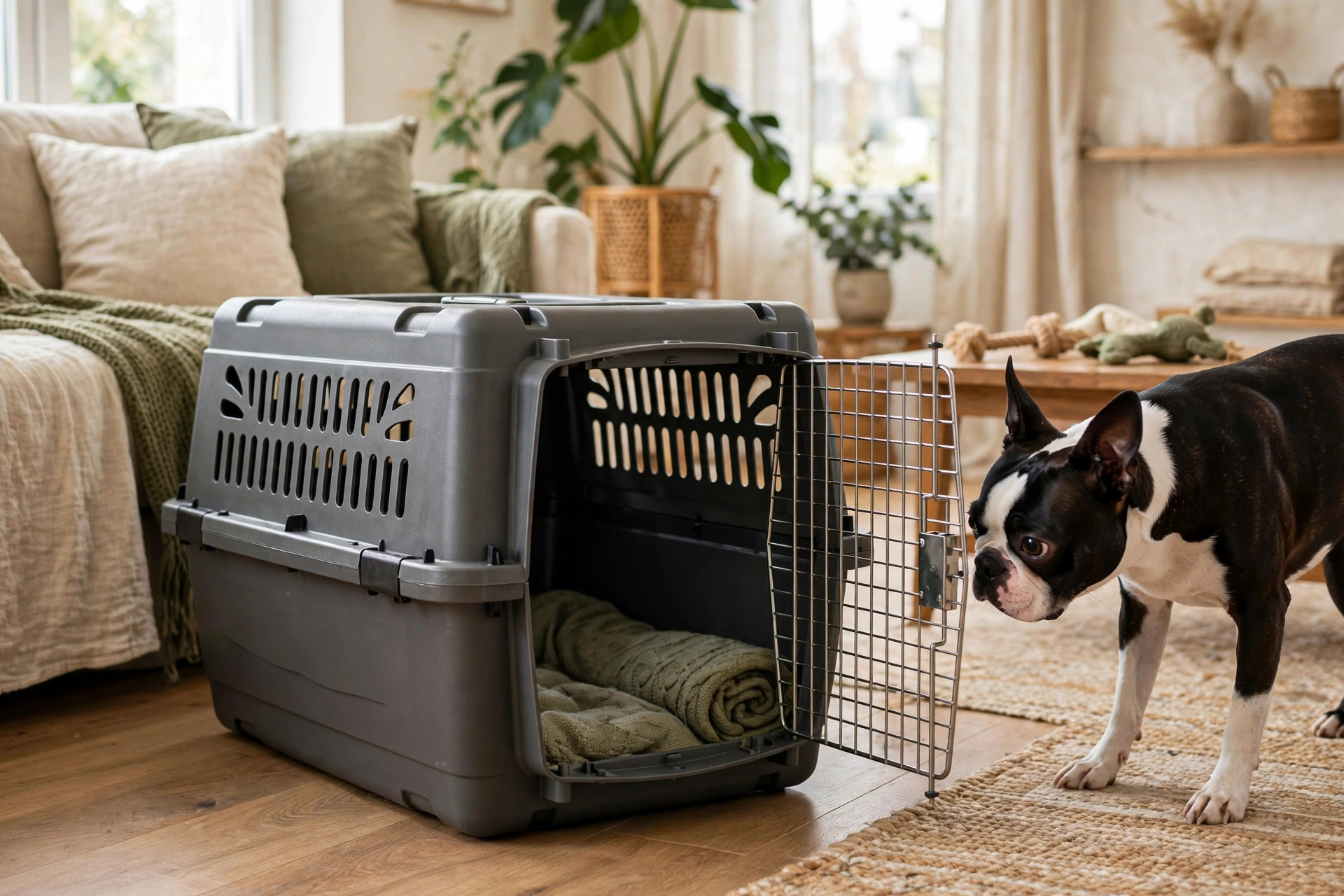
Here’s the part most guides bury: your dog’s flight experience is basically decided weeks before you leave, in your living room. A dog that loves its crate naps through the journey. A dog meeting the crate for the first time at the airport panics — and no amount of airport coffee fixes that.
The timeline that works:
- Three to four weeks out: set the crate up in the living room, door open, treats inside. Don’t close it. Let the crate become furniture with snacks.
- Two weeks out: feed meals in the crate. Close the door for minutes, then longer. Build up to a couple of hours while you’re home.
- One week out: practice the actual travel setup — carrier zipped or crate latched, in the car, engine running. Boring repetition is the point.
- Night before: nothing new. Same crate, same blanket, same routine. Travel day is not the day to improvise.
One more thing: freeze a small water bowl the night before and clip it into the crate. It melts slowly, doesn’t spill on the tarmac, and gives your dog water for hours. Simple, free, and it works.
Paperwork, sorted before you pack
Paperwork is where trips get cancelled at the check-in counter, so treat it as its own project with a deadline a month out. The short version for most international routes: your dog needs a microchip, a current rabies vaccination with a signed certificate, and a vet health certificate issued shortly before departure. The exact timing window and any extra requirements — blood tests, import permits, quarantine rules — depend entirely on the destination country.
Two rules that save people:
- Read the destination’s official rules, not a blog’s summary. Government agriculture or veterinary departments publish the current import requirements. Rules change — what’s true this year wasn’t true two years ago, and a stranger’s forum post from 2022 is not a source.
- Book the vet appointment early. Health certificates have a validity window measured in days, and accredited vets book up. Aim to see the vet in the final week before departure, with a buffer day in case a vaccination record needs sorting.
Flight day: the playbook
Travel day is execution, not planning. Keep it boring:
- Give your dog a long walk or a solid play session in the morning. A tired dog is a calm dog.
- Feed a light meal several hours before departure — not a full dinner, and nothing right before the airport. An empty-ish stomach travels better.
- Arrive earlier than you would without a dog. Pet check-in takes longer, and rushing with an anxious animal sets the tone for the whole trip.
- At security, you’ll take the dog out of the carrier and walk through while the carrier goes through the scanner. Leash on, collar snug, before the carrier opens. Every time.
- Once you’re past security, find a quiet corner — most large airports have pet relief areas now — and settle in. No grand adventures in the terminal.
- On the plane, the carrier goes under the seat and stays closed. A familiar-smelling blanket and a chew do more than any calming gadget.
And the question everyone asks: should you sedate your dog? The short answer is no — veterinary guidance generally advises against sedating dogs for air travel, partly because sedation can affect breathing and balance at altitude, and partly because a groggy dog can’t brace or regulate as well in a moving crate. If your dog’s anxiety is severe, talk to your vet weeks ahead about actual options — not the night before.
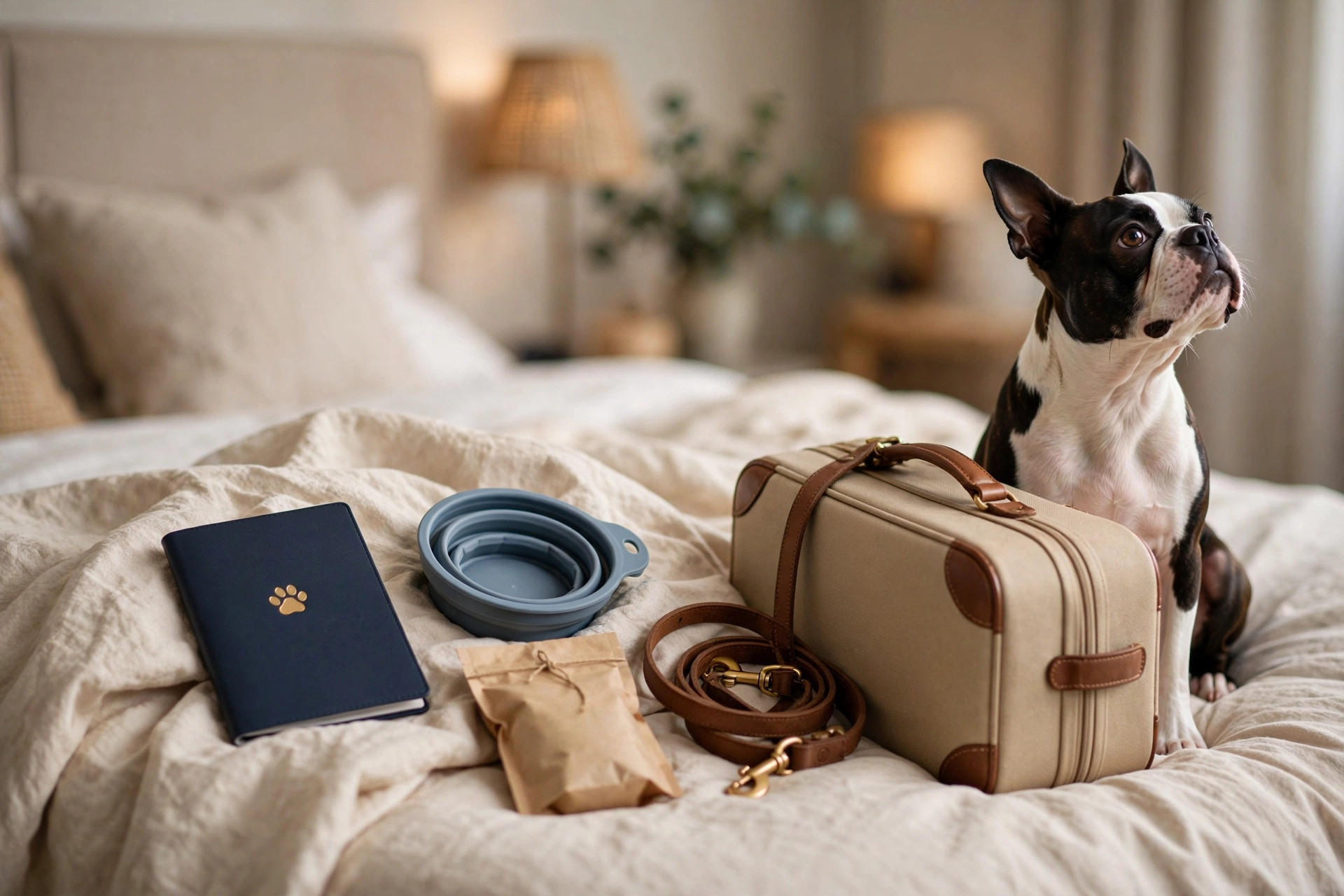
Deciding whether your dog should travel with you is part of a bigger question: what your pet’s days look like when you are away. Our guide to apartment living with a pet: the complete city guide covers sitters, boarding, and the routines that make absences unremarkable.
FAQ
Can any dog fly in the cabin?
No — cabin travel is limited to small dogs that fit in an under-seat carrier, and each airline sets its own weight limit and pet quota per flight. The limit is usually around 8 kg including the carrier, but the only figure that matters is your airline’s published one. Brachycephalic (flat-faced) breeds may be restricted even in the cabin on some carriers.
How much does it cost to fly with a dog?
Airlines charge a flat pet fee per flight segment, separate from your ticket — in-cabin fees are the lower tier, and cargo/hold transport costs more because of the handling involved. Fees vary widely between airlines and routes, so check the pet policy page of the carrier you’re actually booking. Budget for the crate or carrier and any vet paperwork on top of the airline fee.
Can puppies fly?
Most airlines set a minimum age — commonly 8 to 16 weeks depending on the carrier and whether the flight is domestic or international. International routes often require rabies vaccination, which itself has a minimum age, so the effective minimum can be higher. Check both the airline’s age rule and the destination country’s import rules.
Will my dog be cold or scared in the cargo hold?
The hold on passenger aircraft is pressurized and climate-controlled — it’s the same air system as the cabin. As for fear, that’s mostly decided by crate training: dogs that are comfortable in their crates typically settle and sleep, while dogs crated for the first time at the airport have a rough trip. The preparation matters more than the location.
What if my dog barks nonstop in the cabin?
Prevention beats cure: a well-exercised dog in a familiar carrier usually settles. If your dog is a known vocalizer in new environments, be honest with yourself about whether cabin travel is fair to the hundred strangers around you — and consider whether the trip can wait until the training is further along.
Flying with your dog for the first time feels like a lot — and then you do it once, and it becomes a routine like any other part of traveling together. Start the crate training early, book the pet spot before the ticket, and let the paperwork be boring. Your dog will handle the rest.
Sources: IATA Live Animals Regulations (the industry standard airlines follow for animal transport); your airline’s published pet travel policy and your destination country’s official animal import rules for exact limits, fees, and documents.
This article was created with AI assistance and reviewed by our editorial team before publishing.
 Short Trips With a Rabbit: Carrier, Car and Calm Arrivals
 Road Trips With a Cat: A Calm Travel Guide
 Apartment Living With a Parrot: Noise, Space, Neighbours