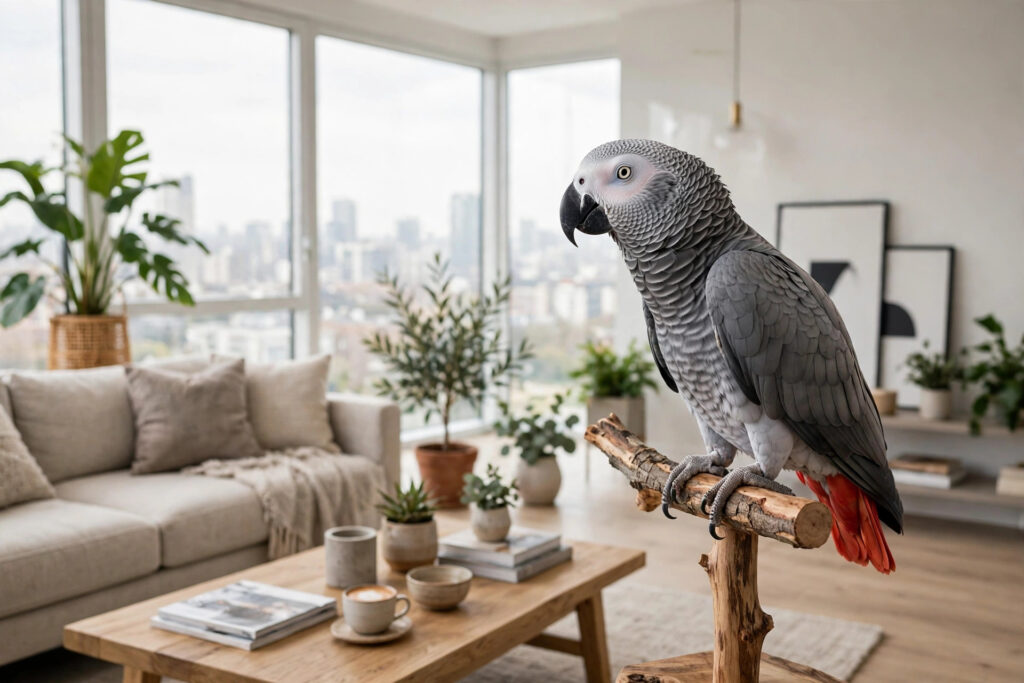
Yes, a parrot can work in an apartment, but only if you plan for noise, mess, and daily attention from day one. An African Grey is clever, social, and sometimes loud. With a roomy cage, predictable routines, sound-softening tweaks, and honest chats with neighbours, flat life can suit you both well.
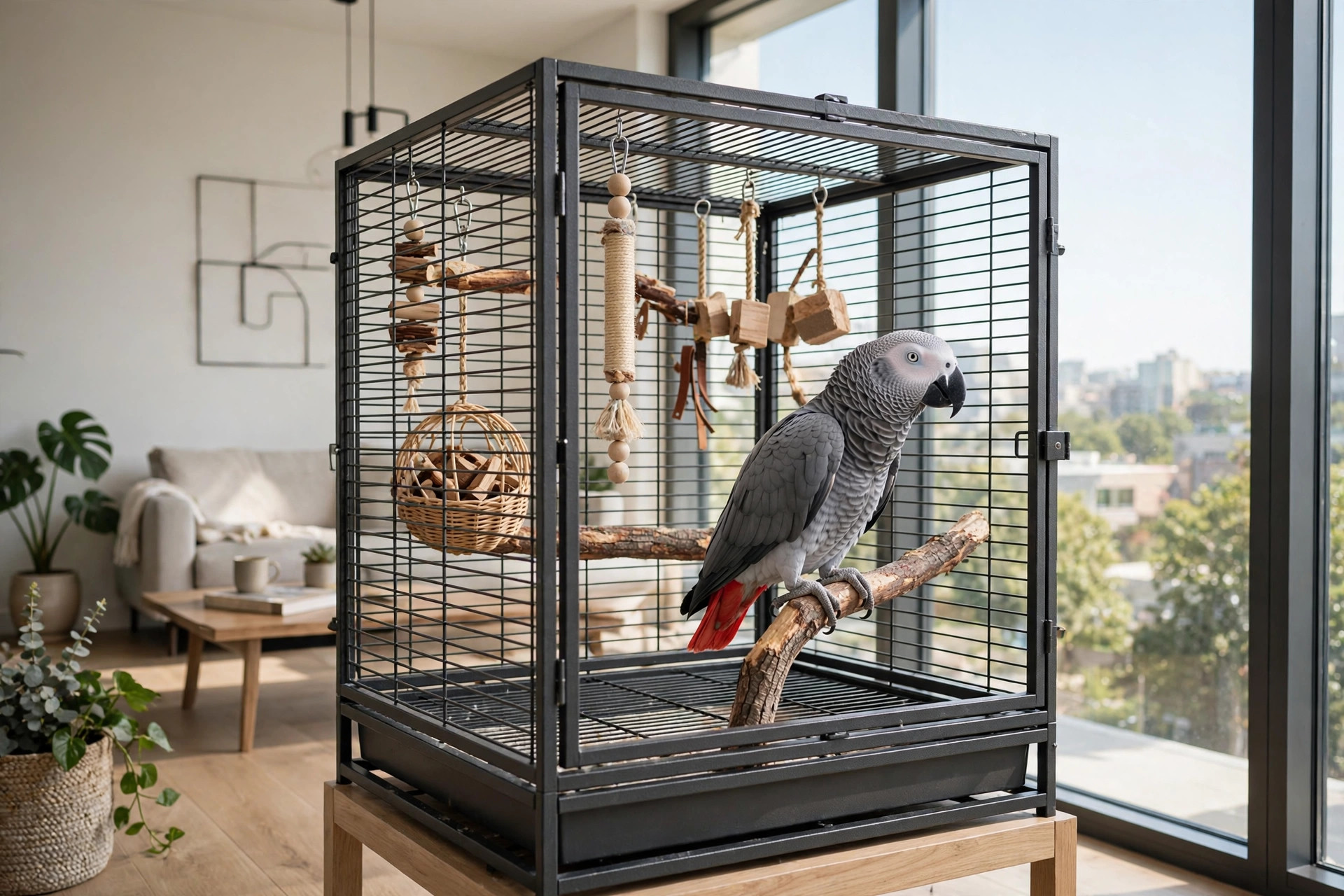
The noise question nobody should sugar-coat
Let’s start with the part that decides everything else. Parrots vocalise. Morning calls, evening calls, contact calls when you leave the room — it’s how they stay in touch with their flock, and in a flat, you are the flock.
An African Grey isn’t the loudest parrot you could choose, but quiet would be the wrong word too. Greys are famous for talking and mimicking household sounds, and a bored or startled bird can let out a sharp screech that carries through walls surprisingly well.
Thin walls? Shared hallway? A neighbour who works nights? Those details matter more than square footage. If any sudden, repeated noise would be a problem in your building, a parrot — any parrot — is a risky fit, and it’s kinder to realise that before a bird comes home.
Choosing a species that fits a smaller home
Size changes everything in a flat. A bigger bird needs a bigger cage, makes bigger mess, and usually has a bigger voice to match. A smaller species won’t be silent, but the day-to-day footprint is easier to live with.
Greys sit in the middle. They’re substantial birds who need real space, yet they’re not in the same league as the largest macaws for sheer volume or cage size. Here’s a rough, qualitative comparison to help you sense where different parrots land:
| Species | Typical size | Noise tendency | Space needs |
|---|---|---|---|
| Budgerigar | Small | Low to moderate — near-constant chatter, rarely piercing | Modest cage, still needs flight space |
| Cockatiel | Small | Moderate — whistles and flock calls | Modest to medium cage |
| African Grey | Medium to large | Moderate to high — talking, mimicry, occasional screeches | Large cage plus daily out-of-cage time |
| Amazon parrot | Medium to large | High — loud calls, especially at dawn and dusk | Large cage plus daily out-of-cage time |
| Large macaw | Very large | Very high — calls built to carry over long distances | Very large cage or aviary-style setup |
Read that table as a tendency, not a promise. Individual birds vary a lot — one Grey talks all afternoon, another stays fairly reserved, then surprises everyone with a perfect doorbell imitation.
Cage placement and out-of-cage time
Put the cage where life happens, just not where it never stops. A corner of the living room usually works well: your parrot can see you, join the conversation in its own way, and still retreat to a quieter side of the cage to rest.
Keep it away from the kitchen, draughty windows, and direct midday sun. Birds overheat fast and chill fast, and a cage parked by a front door gets a blast of cold air and hallway noise every time someone comes home.
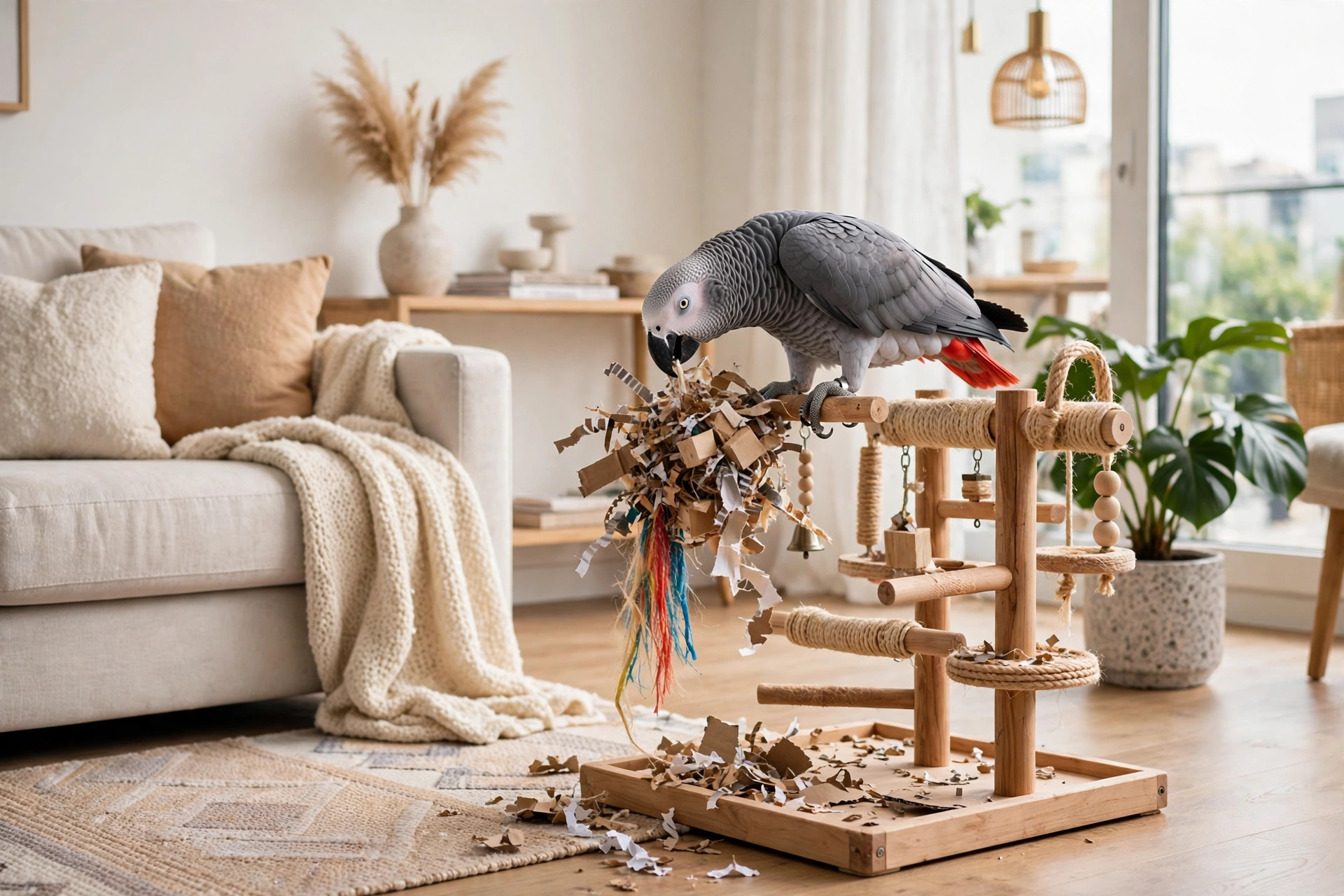
Then there’s time out. A Grey needs several hours outside the cage each day to fly or climb, play, and simply choose where to sit. Bird-proof the room first — cover mirrors if needed, check for chewable cables, and make sure windows and doors are shut before the cage opens. Every time. No exceptions.
A daily routine that keeps things calmer
Parrots relax when the day feels predictable. Wake-up, breakfast, playtime, your work hours, evening social time, lights down — a loose pattern repeated daily does more for behaviour than any gadget you can buy.
Enrichment is the other half of it. Rotate toys weekly. Hide small treats in shredded paper or cardboard foraging toys so your bird has to work a bit for its food, the way it would in the wild. Teach simple target training with a chopstick and a tiny reward; short sessions build trust and give that big brain something constructive to do.
And talk back. Greys pick up words in context, so narrate what you’re doing — “kettle on,” “keys,” “bye-bye” — and you’ll often hear your phrases returned weeks later, alarmingly well timed.
Neighbour diplomacy, done early
Don’t wait for a complaint to introduce your bird. A quick, friendly word with the neighbours on either side — and below you — goes a long way. Tell them you have a parrot, that mornings can be vocal, and that they can knock if it ever gets too much.
You can soften sound, too. Rugs, curtains, upholstered furniture, and a bookcase against a shared wall all absorb noise better than bare floors and blank walls. Place the cage against an interior wall rather than a shared one if you can.
Timing helps as well. Keep the liveliest play and training sessions for sociable hours, cover the cage for a consistent sleep period at night, and avoid starting a noisy game right when the building settles down. Most people tolerate a lot more when they feel you’ve thought about them.
Air quality: the invisible risk
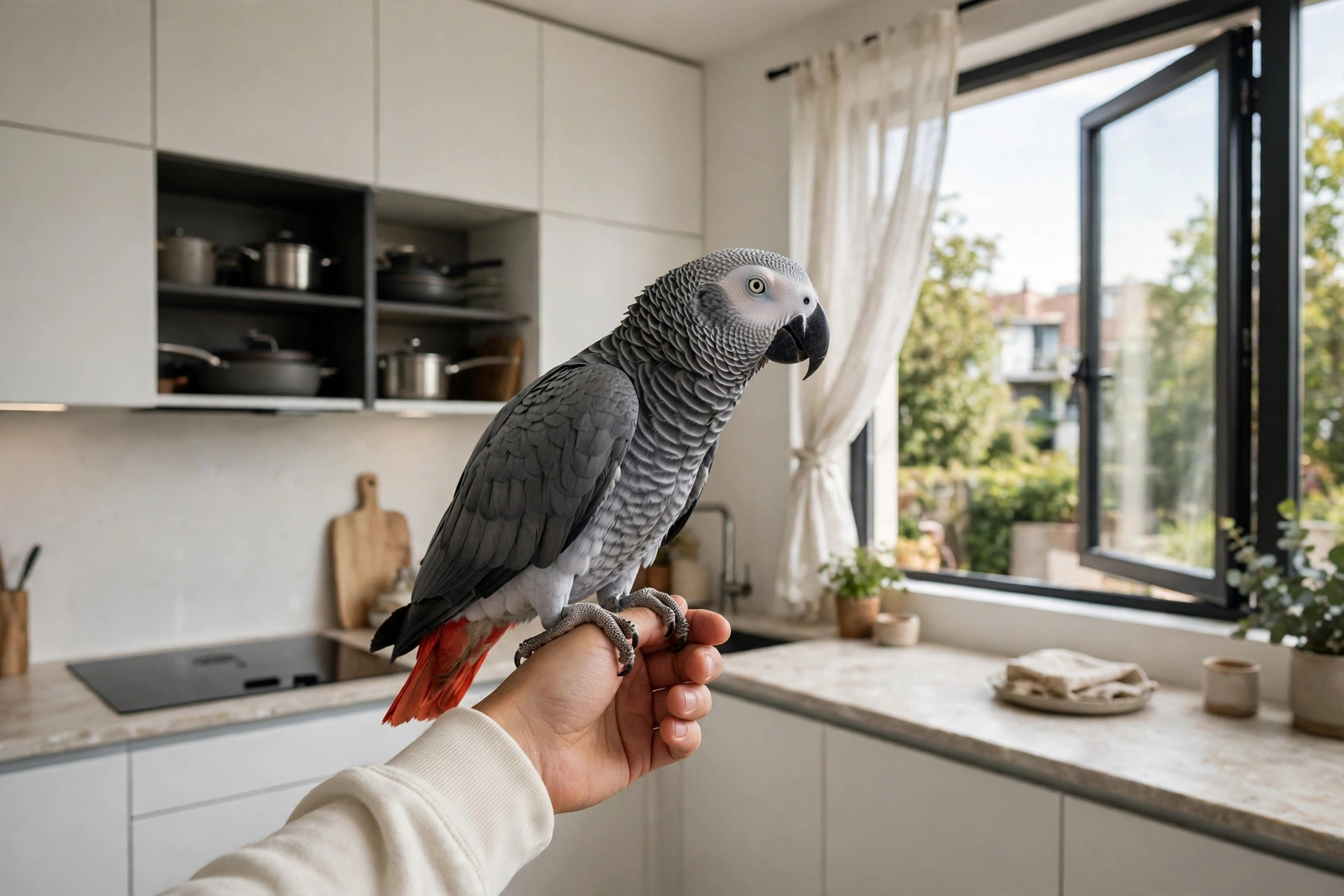
A parrot’s lungs are far more sensitive than yours. Birds have highly efficient respiratory systems, which is wonderful for flight and terrible news in a flat full of fumes — things that barely register for you can seriously harm a bird.
So some household habits have to change. Scented candles, air fresheners, strong cleaning sprays, and heavy fragrances are best kept out of a parrot home, or at least well away from the bird with strong ventilation. Smoking indoors is a clear no.
Cookware deserves special care. Fumes released by overheated non-stick coatings are known to be dangerous for birds, so never leave an empty non-stick pan heating on a high hob, ventilate the kitchen well, and keep your parrot in another room while you cook. If in doubt, choose stainless steel or cast iron for your hottest cooking.
🏠 Some everyday household items are far more dangerous to parrots than to us. Check the Eaoae parrot safety hub — a free reference checker covering foods, plants and household hazards for parrots.
Mess management for small spaces
Feathers. Seed husks. Bits of chewed wood in places you didn’t know existed. A parrot in a flat means tidying becomes a daily rhythm rather than a weekend event.
Small systems help. A washable mat under the cage catches most of the fallout. A handheld vacuum kept nearby turns a five-minute grumble into a thirty-second job. Offer messy fresh foods inside the cage or on the play stand, not over your sofa.
Chew damage is the other cost. Greys explore with their beaks, and skirting boards, window frames, and your favourite chair all look chewable to them. Provide plenty of legal targets — cork, soft wood blocks, cardboard — and supervise out-of-cage time, especially in a rented place where repairs come out of your pocket.
Talking to a landlord, in plain terms
If you rent, check your agreement before anything else. Some leases ban pets outright; others allow them with written permission. Asking first, in writing, is always safer than hoping nobody notices — and with a parrot, somebody will notice.
Make the conversation easy to say yes to. Explain the species, the cage setup, your cleaning routine, and the hours your bird is active. Offer to cover any damage and to introduce references from previous landlords if you have them. Put whatever you agree in writing, so there’s no confusion later.
Bottom line
Apartment living with an African Grey can genuinely work — in the right flat, with the right expectations. Noise is the deal-breaker to weigh honestly, followed by space for a proper cage, hours of daily company, and a home kept free of fumes and scented sprays.
If you can offer all of that, and your neighbours are part of the plan rather than an afterthought, a Grey will repay you with wit, companionship, and conversation you never quite expected. If the fit feels forced, waiting is the wiser call. The bird deserves a home that was ready for it.
This article was created with AI assistance and reviewed by our editorial team before publishing.
 Apartment Living With a Pet: The Complete City Guide
 Apartment Balcony Safety for Cats: A Complete Setup Guide
 Small Apartment, Happy Indoor Cat: Setup Guide