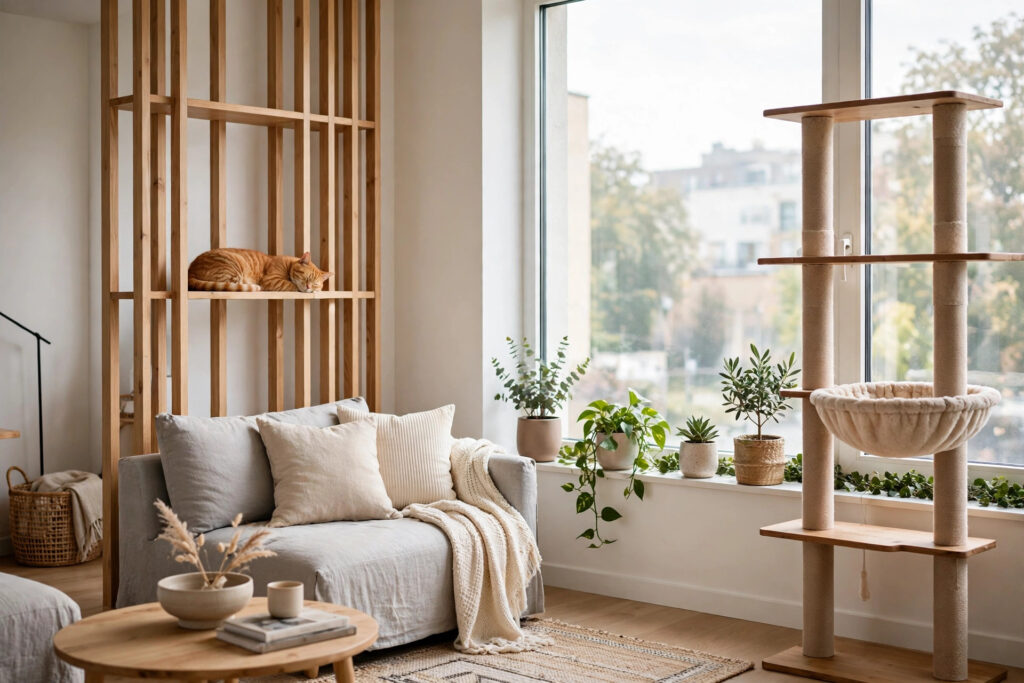
Apartment living with a pet works when three things line up: a pet whose energy fits your floor plan, a home set up for how that animal actually spends its day, and routines your neighbors barely notice. Get those right and a small space stops being a compromise — for you or the animal.
Choosing a Pet That Actually Fits a Small Space
The right apartment pet is the one whose daily energy, noise level, and space needs already match the home you have — not the home you plan to get someday.
Size alone is a poor predictor. A large, mellow dog who sleeps most of the day can be an easier apartment animal than a small, intense one who wants to patrol, bark, and climb everything. What wears on apartment life isn’t square footage. It’s unspent energy and nowhere for it to go.
So start with honest questions. How many hours will the animal be alone on a normal weekday? Where will it exercise — a park, a hallway play session, a window perch? How much noise carries through your walls on an ordinary evening? And how long is the commitment? A cat or dog can share your next fifteen years and several future apartments, so the fit has to survive a move or two, not just this lease.
Dogs are the most flexible option if their exercise happens outdoors, twice a day, whatever the weather. Our guide to the best dog breeds for apartment living in the city walks through which breeds tend to settle well in smaller homes and which ones usually struggle. Cats are the classic apartment animal for a reason: they’re quiet, they use vertical space (more on that below), and their exercise can happen entirely indoors. Small mammals like rabbits and guinea pigs stay in one defined area and make almost no noise, though they need daily floor time and serious chew-proofing. Some rabbit owners even take their rabbits out on short trips — if that’s on your list someday, read what to check first before taking a rabbit to a pet-friendly café, because most “pet-friendly” signs really mean dog-friendly.
Fish ask for floor space for a tank and not much else. Birds are wonderful company but the hardest sell in a thin-walled building — a cheerful dawn chorus is still a chorus. Match the animal to the building you live in, not just the life you picture.
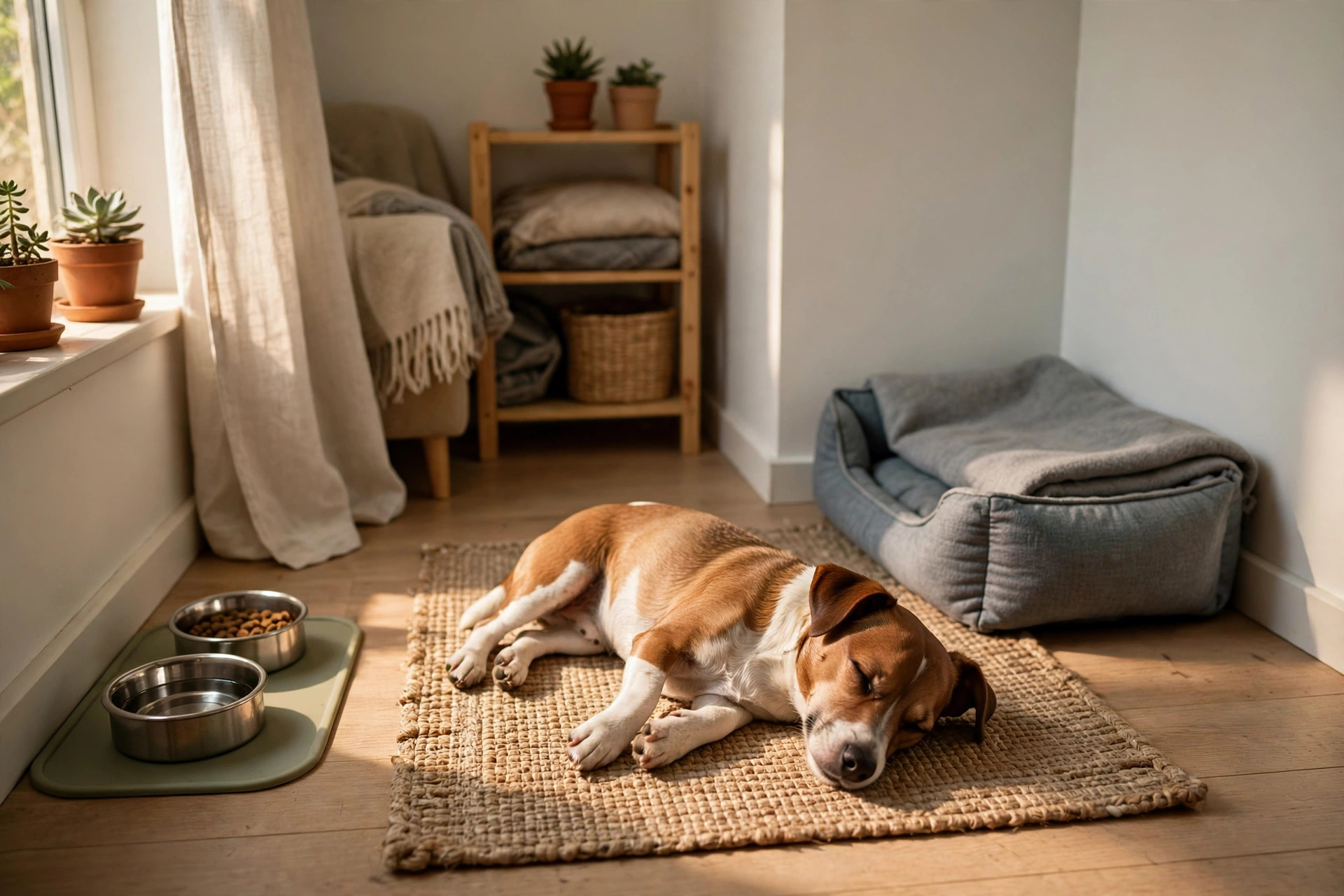
Before You Sign: Lease and Landlord Questions to Ask
Before you sign anything, get clear written answers on whether pets are allowed, which animals qualify, and what it costs — surprises after move-in day help nobody, least of all the pet.
Rules vary wildly from building to building, and “pet-friendly” in a listing can mean anything from “any animal, welcome” to “one small fish, grudgingly.” Ask these questions before you fall for the kitchen:
- Are pets allowed at all — and which species, breeds, sizes, or weights qualify?
- Is there a limit on the number of animals per home?
- Is there a pet deposit, a monthly pet fee, or specific damage terms? Get the figures in the lease, not in a hallway conversation.
- What are the rules for shared spaces — elevators, stairwells, courtyards, laundry rooms?
- Can a friend’s pet visit or stay over? Pet-sitting a friend’s dog for a week can count as keeping a pet.
- If a neighbor complains about noise, what happens next — a warning, a meeting, something more serious?
- Does the building require anything from you, such as registering the pet with management or keeping vaccinations current?
Whatever gets agreed, get it in writing, in the lease or an addendum you both sign. A friendly “yeah, cats are fine” evaporates the day the building changes managers. And when you move in, photograph the floors, walls, and window screens before your pet spends a single night there — that dated photo set is what settles deposit arguments a year later.
Already renting and thinking of getting a pet? The same list applies, in the same order: permission first, pet second. Rehoming an animal because a lease said no is a heartbreak that one email, sent early, prevents.
Noise and Neighbor Etiquette
Most neighbor friction comes from predictable sounds at predictable hours — barking at the door, hallway encounters, scuffles through thin floors — and nearly all of it is manageable once you know the triggers.
Door barking is the big one. Dogs learn that hallway sounds mean strangers, and they announce every arrival. You can’t soundproof a dog, but you can change the association: reward quiet when footsteps pass, keep a chew or puzzle ready for the busy hour when everyone comes home, and avoid the excited doorstep greeting that teaches them the front door is the most thrilling place on earth.
Floors are the other channel. A dog doing midnight zoomies on bare wood sounds, one floor down, like furniture being moved. Rugs in the play zone, soft toys after dark, and the biggest play session earlier in the evening fix most of it. Cats are quieter tenants, though a determined 3 a.m. shelf-clearing has its own acoustics — another argument for the secure shelving in the vertical-space section below.
Hallway etiquette is simple and mostly about leashes: keep your dog short-leashed and close in corridors and elevators, let neighbors pass first, and never let an enthusiastic dog greet someone who hasn’t asked. Not everyone loves dogs, some people are afraid of them, and “he’s friendly” doesn’t settle it. Pick up after your pet in every shared space, every time, including the courtyard corner nobody uses. Small courtesies, done consistently, are what buy you goodwill on the one day your pet is genuinely loud — a vet-visit day, a thunderstorm, a fire alarm test. Neighbors forgive the exception when the rule is quiet.
Indoor Exercise and Enrichment
A tired pet is a quiet tenant, and most apartment pets get their exercise in short, frequent bursts — real walks outside, plus five-to-fifteen-minute play and puzzle sessions indoors.
For dogs, build the day around two anchors: a proper morning walk before work, long enough for sniffing and not just a toilet dash, and a slower evening walk that lets them decompress. Sniffing is mental work; a twenty-minute sniff-heavy walk can settle a dog better than a longer forced march. The right kit makes those walks easier in bad weather and crowded streets — our list of city dog walking essentials covers the gear that earns its drawer space.
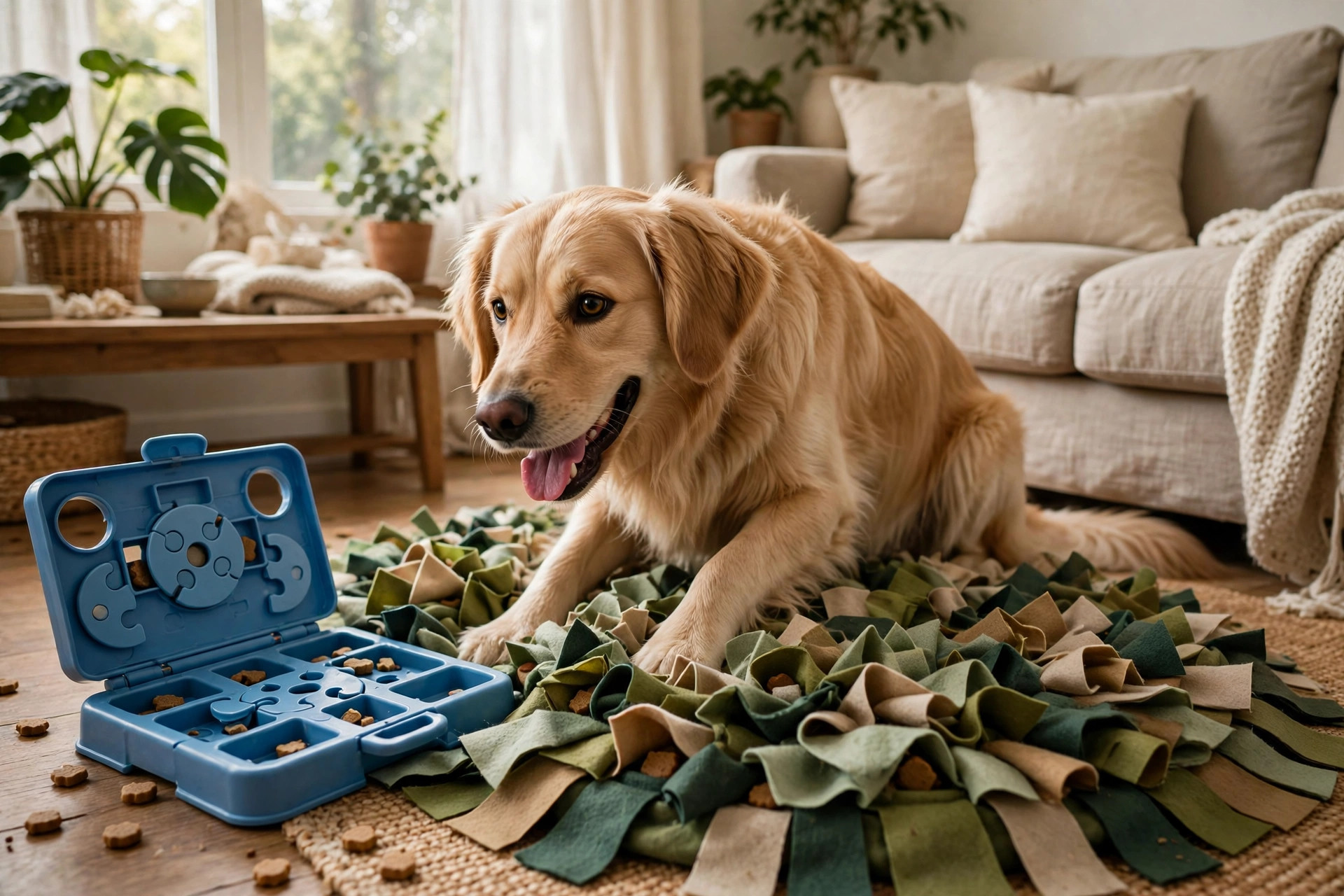
Indoors, food is your best enrichment tool. Scatter a portion of dinner in a snuffle mat, freeze wet food on a lick mat, or hide treats in a muffin tin under tennis balls. Ten minutes of nose work is a real workout for most dogs. Short training sessions count too: five minutes of practicing “settle on your mat” or learning a new trick burns more energy than it looks, because thinking is tiring.
Cats follow a hunt-catch-eat rhythm. Two or three short play sessions a day with a wand toy — morning and evening work best — ending with a meal, mirrors how they’d spend energy outdoors. Rotate toys weekly so yesterday’s ignored feather becomes interesting again. And cats can get genuine outdoor exercise too: a well-fitted harness and a quiet route turn a confident indoor cat into a city explorer, as our cat harness and leash guide for city walks explains. Small mammals need daily out-of-pen floor time in a chew-proofed room or playpen — an hour of exploring is their version of a long walk.
Vertical Space: The Cat Apartment Multiplier
For cats, the usable size of your apartment is measured in height as much as floor area — shelves, perches, and one tall tree can double the territory a cat actually uses.
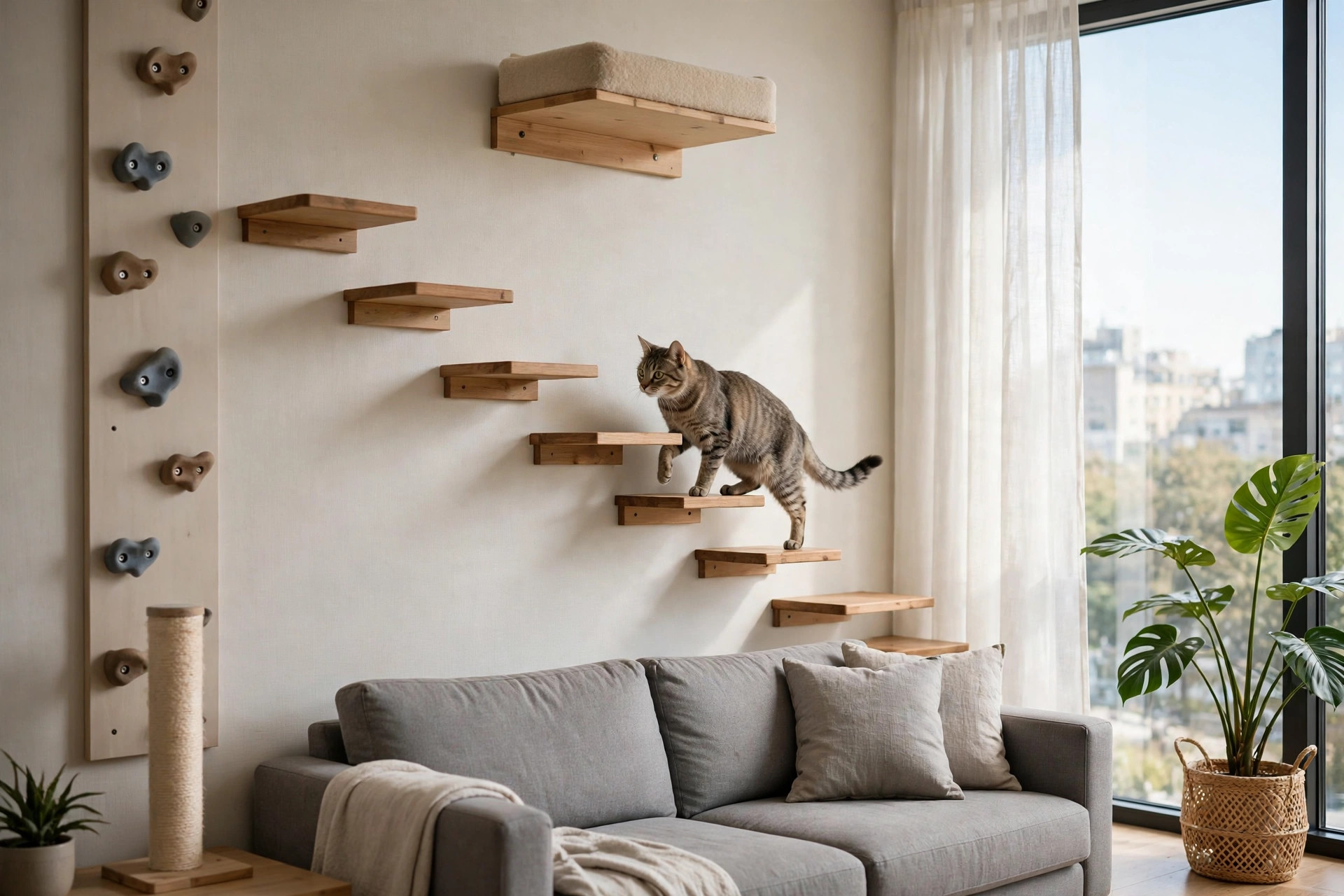
Cats read a room in three dimensions. The floor is shared with you, the dog, and the vacuum cleaner; the top of the bookshelf is sovereign territory. A staggered route of wall shelves that lets a cat cross the room without touching the floor gives an indoor cat something small apartments rarely offer: a choice of where to be, including somewhere away from everyone.
Build it sturdy. Shelves go into studs or proper wall anchors, never just drywall plugs, and each landing should hold the cat landing on it at speed, not just standing still. Put the tall tree or highest perch near a window — height plus a view is the combination cats pick first, every time. Add one vertical scratching post so the climbing route includes somewhere legal to scratch, and keep one high spot that’s purely a retreat: no reaching in, no being lifted down. Our small apartment indoor cat setup guide lays out a full room-by-room arrangement if you’re starting from an empty flat.
Vertical thinking helps dogs a little differently — raised beds and a defined “place” give them a station that’s theirs in a home where every room is shared. But the real multiplier is feline. Two cats in a small apartment, in particular, don’t need more floor. They need more levels, so they can pass each other like ships at different altitudes instead of squaring off in the one doorway.
Balcony and Window Safety
An unscreened window or unnetted balcony is the one apartment risk that can turn serious in seconds, so screens and netting go up before the first sunny day, not after the first scare.
Windows first. Ordinary insect screens keep flies out; they were never built to hold a lunging cat or a dog who spots a pigeon. Look for pet-resistant mesh in a frame that locks into the window, and check that the frame itself can’t pop out when pushed. If your windows tilt inward from the top, treat the side gaps as a hazard too — cats can slip into the V of a tilted window and get stuck, so fit gap guards or keep tilt windows closed when you’re out.
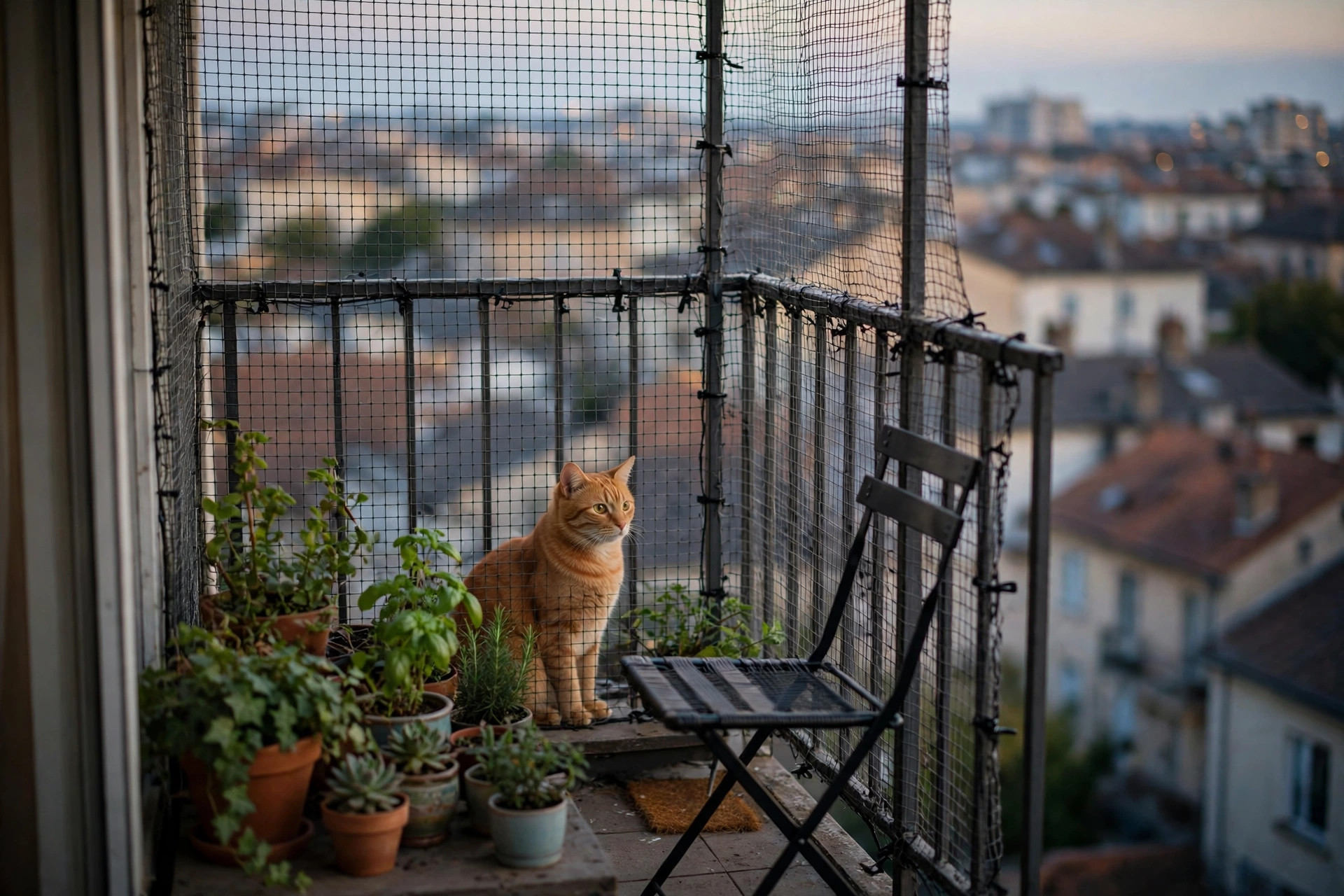
Balconies need a full enclosure, not a gesture. Netting or mesh should run floor to ceiling and rail to wall, fixed on every edge with no loose corners and no gap at the bottom a cat can belly under. Our apartment balcony safety guide for cats goes through the measurements and fixes step by step. Dogs need the same thinking about rail spacing — a small dog’s head through the rails is the measurement that matters. And even with perfect netting, balcony time stays supervised time. Nets get chewed, fixings loosen, and furniture migrates toward the rail, building a launch pad.
🌿 Putting plants out on the balcony? Some common ones are toxic to cats and dogs if chewed. Check a plant on Eaoae before it goes outside — a free plant safety checker covering common house and balcony plants.
One last window habit: before you leave home, walk the apartment once and close anything you wouldn’t want found open. It takes twenty seconds, and it converts most “how did that happen” stories into non-events.
Leaving the Apartment: Alone Time and Routines
Pets cope with your workday when alone time is built up gradually and the day keeps a predictable shape — exercise before you leave, something quiet to do, and a calm return.
Sudden full workdays are where separation problems start. Build up instead: short absences first, then an hour, then a morning, with departures kept deliberately boring. Same shoes, same door, no long goodbye. Most pets read your routine like weather — if leaving looks ordinary, it feels ordinary. A dog who has had a real walk and a frozen lick mat to work on experiences your absence very differently from one left buzzing with unspent morning energy.
Routine is the scaffolding. Feed, walk, and play at roughly the same times and the whole household relaxes, because the pet stops monitoring you for signals. Young dogs may still need a midday break — a walker, a neighbor swap, your own lunch trip home — until they’re old enough to hold on comfortably. A camera, if you use one, is for your peace of mind and for spotting patterns (barking at noon deliveries, say), not for talking to your pet through a speaker, which confuses more animals than it comforts.
For longer stretches — holidays, work trips — decide early between a sitter in your home, boarding, or the pet traveling with you, and book the good options before everyone else does. If the trip includes your dog and a flight, our guide to flying with your dog, cabin vs. cargo explains what each option actually involves, so you can judge whether your dog should come at all. Coming home to an apartment pet should end the way it started: unremarkable. Walk in, put your bag down, then say hello. The message, every day, is that departures and returns are just furniture in a stable life — which, for an animal in a small home, is exactly what they are.
Frequently Asked Questions
Can you really keep a dog in a small apartment?
Yes, if the dog’s energy level and exercise needs match the life you can actually give. Size matters far less than fit: a calm, larger dog with two good walks a day usually settles better than a small, high-drive dog with none. Choose for temperament and your schedule, not for square footage.
What should I ask a landlord before getting a pet?
Ask which species, breeds, and sizes are allowed, whether there’s a limit on the number of animals, what deposit or monthly pet fee applies, what the shared-space rules are, and what happens if a neighbor complains. Then get the answers in writing, in the lease or a signed addendum — verbal permission doesn’t survive a change of building manager.
How do I keep my dog quiet when I’m at work?
Start with the recipe, not the symptom: a real walk before you leave, alone time built up gradually from short absences, and something constructive to do, like a frozen lick mat or a puzzle feeder. If barking or destructive behavior persists despite that, talk to your vet about anxiety — ongoing distress is a welfare issue, not just a noise issue.
How much space does an indoor cat actually need?
Less floor than you’d think, provided the height is used well. A cat with a secure shelf route, a high perch by a window, a scratching post, and daily play sessions can live contentedly in a compact apartment. What cats can’t do without is territory they control — levels, hiding spots, and a litter setup away from their food.
Is a balcony safe for a cat?
Only when it’s fully enclosed with netting or mesh fixed floor to ceiling on every edge, with no gaps at the bottom — and even then, only with supervision. An open balcony, or one with wide rail spacing, is never safe for a cat. The same check applies to windows: use pet-resistant screens that lock into the frame.
This article was created with AI assistance and reviewed by our editorial team before publishing.
 Apartment Living With a Parrot: Noise, Space, Neighbours
 Apartment Balcony Safety for Cats: A Complete Setup Guide
 Small Apartment, Happy Indoor Cat: Setup Guide