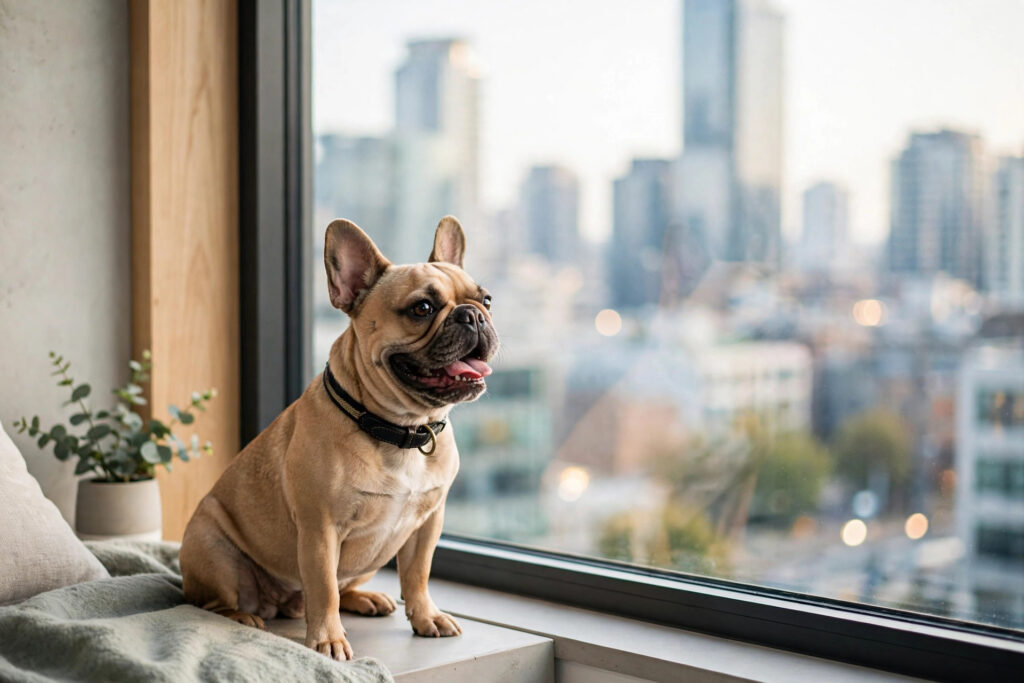
The best dog breeds for apartment living are the ones that match your energy, your schedule, and your square footage — not the smallest ones by default. Cavalier King Charles Spaniels, French Bulldogs, Greyhounds, and Bichon Frises consistently top the list because they are quiet, low-exercise, and genuinely content in compact spaces, while some tiny breeds like Jack Russell Terriers can be a nightmare in a studio if you work long hours.
City dog ownership is booming, and the old rule that you need a house with a yard is officially outdated. Plenty of dogs are happier in a 600-square-foot apartment with an owner who’s home in the evenings than in a big suburban house where nobody’s around. The secret isn’t the breed’s size — it’s matching the dog’s temperament to your actual life.
What Actually Makes a Dog Apartment-Friendly
Forget the myth that small automatically equals easy. The four traits that matter most in an apartment are:
- Low to moderate exercise needs. A dog that needs two hours of running a day will not thrive in a walk-up apartment, no matter how cute it is.
- Quiet. Thin walls and neighbors make barking a real quality-of-life issue. Some breeds are hardwired to be vocal.
- Adaptable to routines. Apartment dogs live by the elevator schedule — out at 7 a.m., out at lunch if you’re lucky, out after work.
- Comfortable alone. Most apartment dwellers work. A breed prone to separation anxiety will redecorate your rental in your absence.
Eight Breeds That Thrive in Small Spaces
1. Cavalier King Charles Spaniel
The near-perfect apartment dog. Cavaliers weigh 12–18 pounds, need about 30 minutes of exercise a day, and were literally bred to warm laps in palaces. They’re quiet, gentle with neighbors’ kids, and adaptable to almost any schedule. The trade-off: they can develop separation anxiety, so crate training from day one matters.
2. French Bulldog
Compact, comical, and famously low-energy indoors. Frenchies need two short walks a day — around 20–30 minutes total — and spend the rest of their time napping in whatever spot you’ve claimed. They’re quiet by nature, which neighbors will appreciate. Watch for breathing issues in hot weather; they’re a brachycephalic breed, so air conditioning isn’t a luxury, it’s a requirement.
3. Greyhound
The biggest surprise on this list. Retired racing greyhounds are 45-mph couch potatoes: one 20-minute walk and they’re done for the day. They’re silent, clean, and fold themselves into astonishingly small spaces. A greyhound in a studio apartment is one of urban dog culture’s best-kept secrets.
4. Bichon Frise
Cheerful, hypoallergenic-coated, and weighing under 18 pounds. Bichons need moderate playtime but are perfectly happy with indoor games on rainy days. They’re social butterflies — great for buildings with a dog run or an active pet community. Their coat needs professional grooming every 4–6 weeks, so budget for that.
5. Pug
Pugs were bred for one job: companionship. They need minimal exercise, they’re quiet, and they treat your couch like a throne. Two things to know: they shed more than you’d expect for a small dog, and like Frenchies, they’re heat-sensitive. Keep walks short in summer.
6. Shih Tzu
Another breed built for palace life. Shih Tzus are calm indoors, friendly with strangers in the hallway, and content with a couple of short walks daily. Their long coat needs daily brushing or a short “puppy cut” every 6–8 weeks. They’re sturdy little dogs despite the royal looks.
7. Boston Terrier
The gentleman of the dog world. Bostons are polite, quiet, and adaptable, with moderate energy that fits a young professional’s life — up for a weekend hike, happy to binge a series on weeknights. They weigh 12–25 pounds and do well with first-time owners.
8. Dachshund (Miniature)
Spirited and loyal in a 10-pound package. Mini dachshunds need about 30–45 minutes of activity a day and are surprisingly sturdy walking companions. One caution: they can be vocal, so early training on quiet cues pays off in an apartment building. And keep them at a healthy weight — extra pounds stress their long backs.
Breeds to Think Twice About
Honesty time: some beloved breeds are a rough fit for apartment life. Huskies and Border Collies need serious daily exercise that a lunch-break walk can’t cover — a bored Border Collie in a studio is a renovation project waiting to happen. Beagles and other hounds are vocal by design. And large, high-energy adolescents of any breed will test your walls, your patience, and your security deposit. None of this means it’s impossible — it means going in with eyes open and a real plan for exercise and enrichment.
Making a Small Space Work
The apartment itself matters less than how you use it. Set up a defined “dog zone” — a bed or crate in a quiet corner that belongs to them. Use puzzle feeders and snuffle mats to burn mental energy when space is tight; 15 minutes of nose work tires a dog out as effectively as a long walk. Stick to a schedule: dogs in small spaces do best when walks, meals, and play happen at predictable times. And learn your building’s rules before you sign the adoption papers — weight limits, breed restrictions, and pet deposits vary wildly, and some buildings cap dogs at 25 or 35 pounds.
The Real Cost of City Dog Ownership
Budget honestly before you commit. In most major cities, the first year with a dog runs $1,500–$3,000: adoption fees ($150–$500), initial vet visits and vaccines ($200–$400), supplies ($200–$300), and pet insurance ($30–$60 a month, worth it in year one). Ongoing, expect $100–$200 a month for food, insurance, grooming, and the occasional dog walker. Buildings often add their own costs too — pet deposits of $200–$500 and monthly “pet rent” of $25–$75 are common in newer developments. None of this is a reason not to get a dog; it’s a reason not to be surprised.
Choosing the breed is only the first decision, though. Our guide to apartment living with a pet: the complete city guide covers what comes next — the lease questions, noise etiquette, indoor exercise, and safety checks that make the choice work day to day.
FAQ
What’s the best apartment dog for someone who works full-time?
A calm adult dog — often a better bet than any specific breed. Adult rescues aged 2–5 are past the destructive puppy phase, can hold their bladder for a workday with a midday walker, and their temperament is already known. Among breeds, Greyhounds and Cavaliers handle alone time best.
How much exercise does an apartment dog really need?
Most apartment-friendly breeds need 30–60 minutes of walking plus some play daily. That’s very doable: a 20-minute morning walk, a quick evening loop, and a puzzle toy at lunch. The breeds on this list were chosen because they stay healthy and happy on exactly that.
Are big dogs ever okay in apartments?
Yes — energy matters more than size. A calm 60-pound Greyhound is a better apartment dog than a wired 15-pound terrier. That said, check your lease: many buildings enforce weight limits regardless of temperament.
How do I keep my dog quiet for the neighbors?
Exercise and mental stimulation prevent most nuisance barking. For alert barking at hallway noise, a white noise machine near the front door works wonders. If barking persists, it’s usually boredom or anxiety — solve the cause, not the symptom.
Should I get a puppy or an adult dog for an apartment?
For most apartment dwellers, an adult dog is the smarter choice. Puppies need potty breaks every two hours, chew everything, and cry at night — all harder in close quarters with neighbors. An adult dog’s energy level and habits are already visible, so there are no surprises.
This article was created with AI assistance and reviewed by our editorial team before publishing.
 Apartment Living With a Parrot: Noise, Space, Neighbours
 Apartment Living With a Pet: The Complete City Guide
 Apartment Balcony Safety for Cats: A Complete Setup Guide