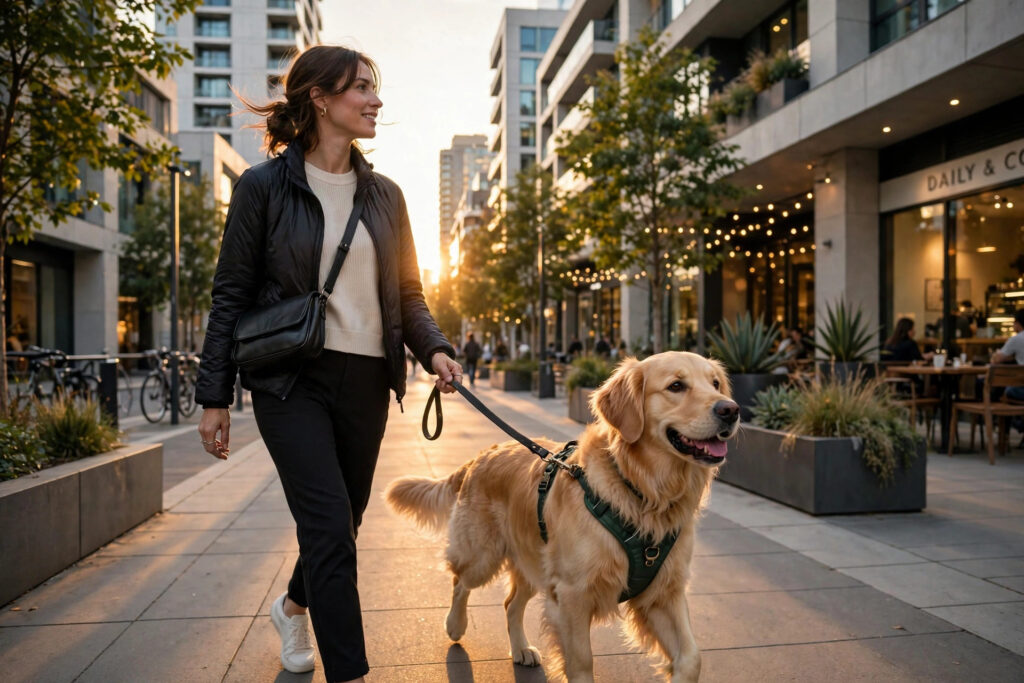
The short version: The perfect city walk kit fits in one small crossbody bag: a well-fitted Y-shaped harness, a 1.8 m leash, a treat pouch, sturdy poop bags, a collapsible water bowl, an ID tag, reflective gear for after dark, paw balm, and a light rain layer. Comfort and visibility first — the fancy extras can wait.
Walking a dog in the city is a different sport from walking one in the suburbs. You’ve got traffic, crowds, lifts, café patios, wet market mornings, and pavement that turns into a griddle by noon. Your dog doesn’t need more gear — they need the right gear, and ideally all of it in one bag you can grab on the way out.
This is the kit we’d hand to any new city dog owner. Ten essentials, what to look for in each, and — just as useful — what you can skip.
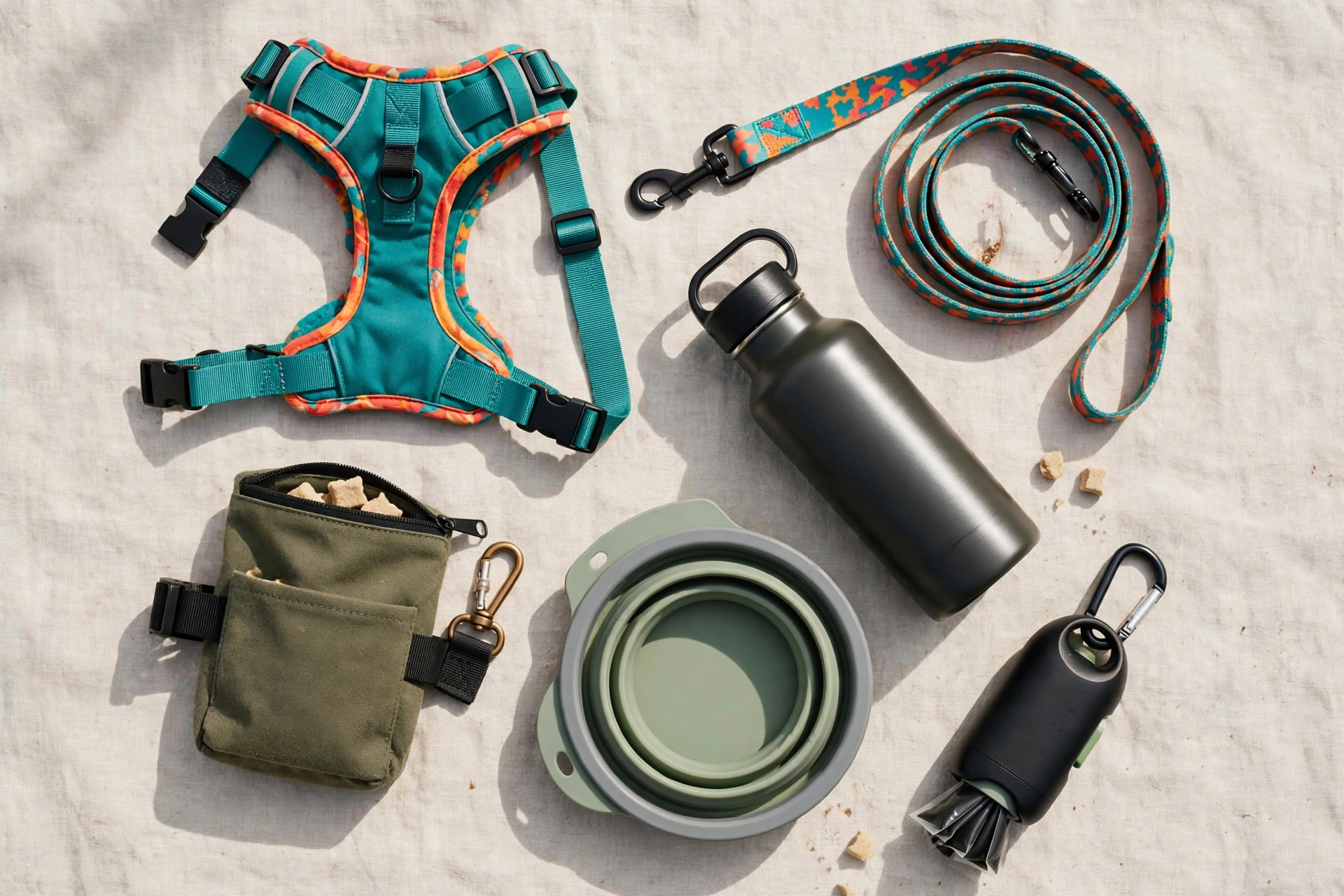
1. A Y-shaped harness that actually fits
The collar-vs-harness debate ends the moment your dog spots a cat across the road. A collar puts all that force on the neck and trachea; a well-fitted harness spreads it across the chest and shoulders. For enthusiastic pullers, it’s not a preference — it’s basic comfort.
What to look for: a Y-shaped front (the straps should sit on either side of the breastbone, not across the throat), a front clip option for pullers, and at least four points of adjustment. The two-finger test still rules: you should be able to slide two fingers under every strap — snug enough not to twist, loose enough not to chafe.
Who should skip it: honestly, almost nobody. The only exception is the rare dog who walks in a perfect loose heel on a flat collar and has never pulled in their life. If that’s your dog, don’t fix what isn’t broken.
2. A 1.8 m leash — no longer, no retractables
Retractable leashes are the city walk’s worst enemy. They teach dogs that pulling gets rewarded with more leash, they jam at the worst moments, and the thin cord is genuinely dangerous around bike wheels, lift doors, and other dogs.
What to look for: a flat 1.8 m (6 ft) leash in nylon or biothane, with a traffic handle — that second grab loop near the clip. It lets you reel your dog in close at road crossings and in crowds without wrapping leash around your hand.
Who should skip it: no one. This is the single highest-value upgrade on the list.
3. A treat pouch (not your pocket)
Training happens on every walk, whether you plan it or not. A pouch you can open one-handed means you can reward a calm sit at a crossing in under two seconds — and timing is everything in training. Keep treats pea-sized and soft; your dog should be able to swallow without stopping to chew.
What to look for: a waist-clip or belt pouch with a wide stay-open mouth and a separate pocket for your phone and keys. Machine-washable is non-negotiable — it will get disgusting.
Who should skip it: if your dog is fully trained and you’re just doing a quick toilet loop, fine. But for any walk where you’re practicing manners, the pouch earns its keep.
4. Poop bags that don’t betray you
Everyone has a horror story. Thin bags, hot day, you know the rest. This is the cheapest item on the list and the one most worth overbuying.
What to look for: thick, unscented bags with tie handles — tie handles matter because public bins are often full and you’ll be carrying. Compostable or recycled-plastic options exist if that matters to you. Carry at least three per walk and clip a dispenser to the leash so you’re never caught out.
5. Water on demand
City fountains and café water bowls are nice when they appear, but you can’t plan around them. Dogs overheat faster than people think — they cool almost entirely by panting — so water breaks matter, especially on warm evenings.
What to look for: a collapsible silicone bowl (they flatten to nothing) plus whatever bottle you’re already carrying. Offer water every 15–20 minutes on warm walks, and always after a play session.
Who should skip it: nobody on walks over 20 minutes. Dehydration sneaks up on small dogs and flat-faced breeds especially fast.
6. An ID tag and a registered microchip
City dogs slip collars, bolt at loud noises, and occasionally outsmart their humans. A tag with your dog’s name and two phone numbers is the fastest way home if the worst happens — faster than any app or social media post.
What to look for: a flat, engraved tag (quieter than dangling ones, and it won’t catch on things) attached to the harness if your dog doesn’t wear a collar on walks. And check that the microchip registration actually has your current number — a shocking number of chips point to old owners or blank records.
7. Be seen after dark
A huge share of city walks happen after sunset — after work, after dinner. Drivers reversing out of carparks and cyclists on shared paths genuinely cannot see a dark-coated dog at 20 metres.
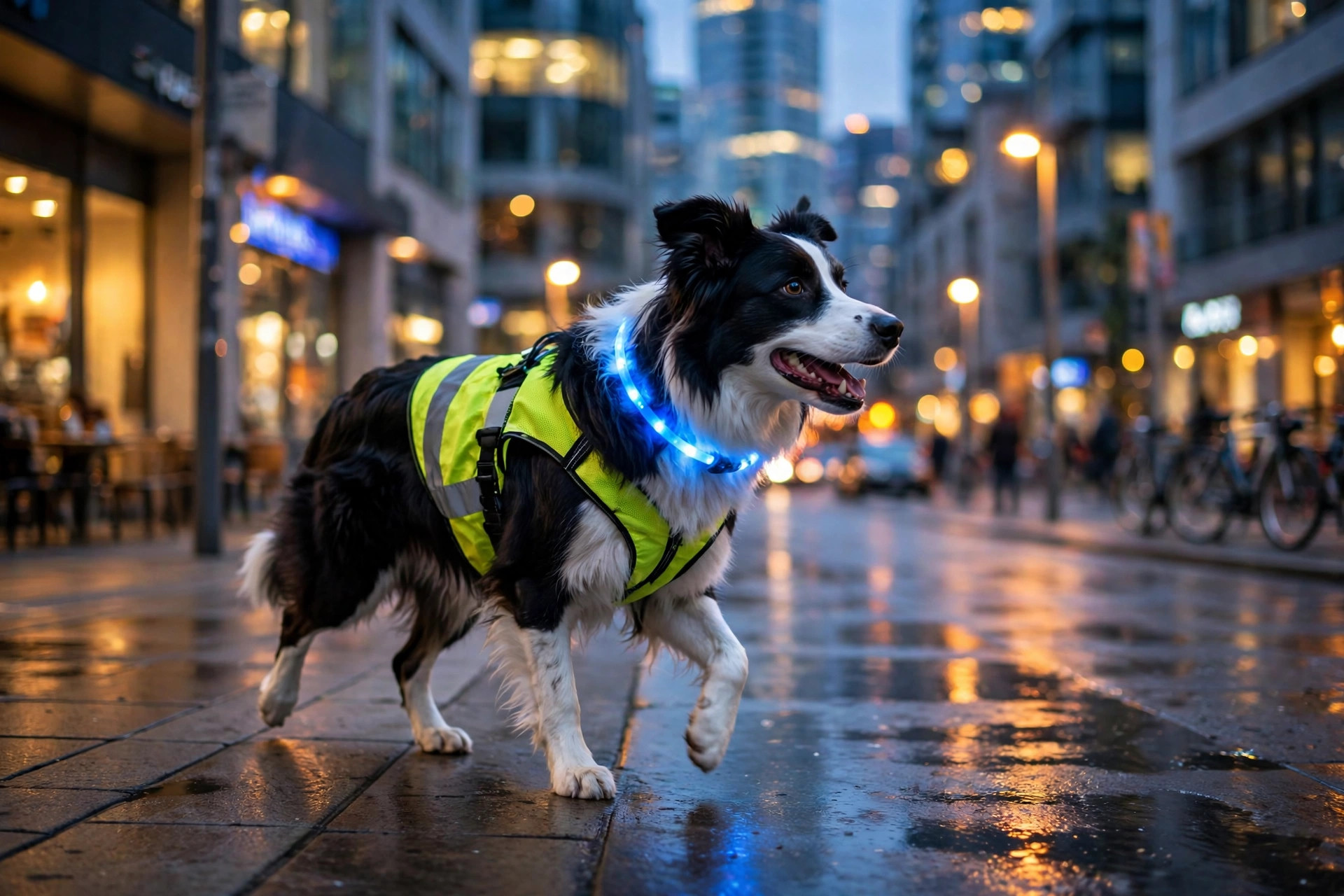
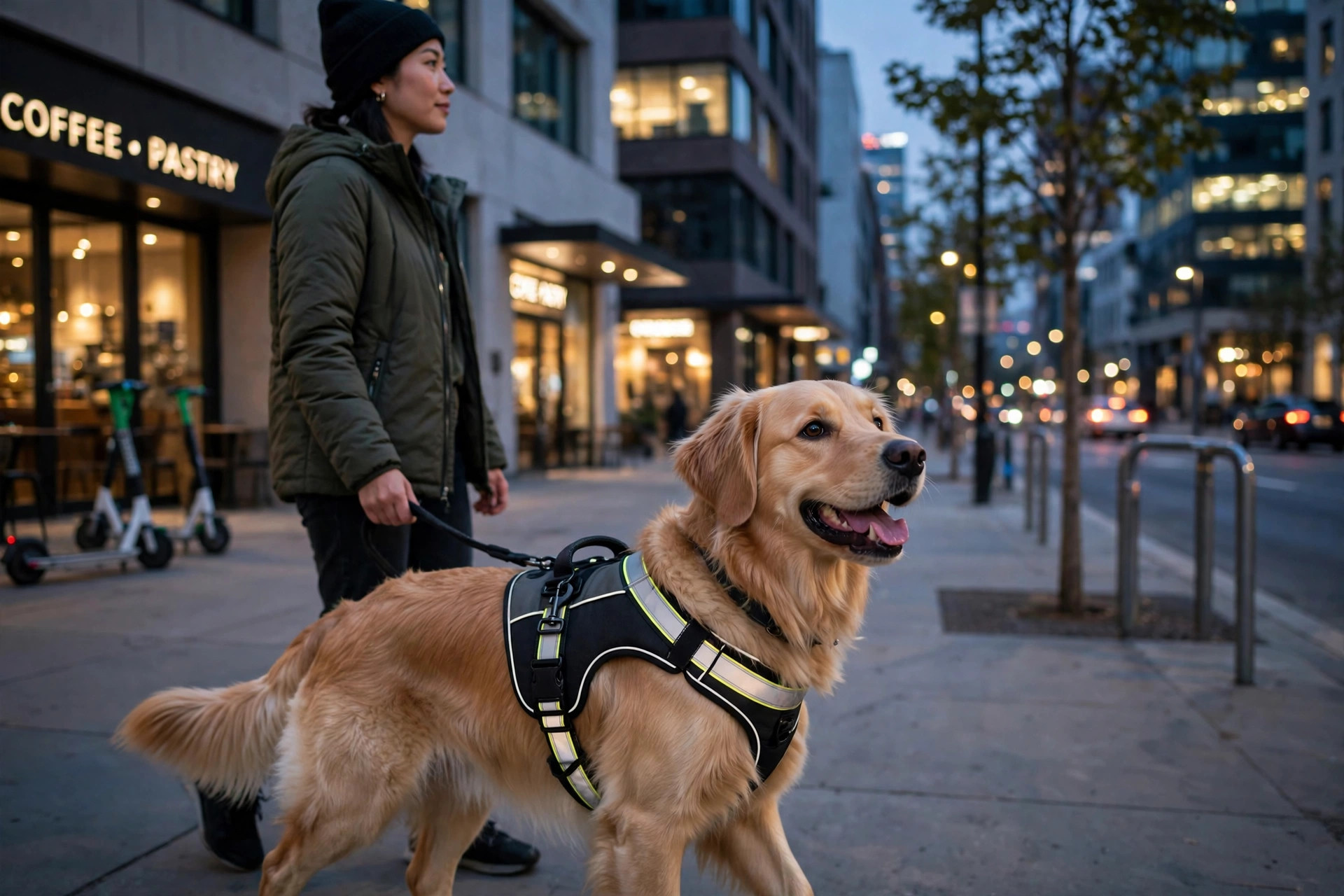
What to look for: reflective trim on the harness or a lightweight reflective vest, plus a clip-on LED light for the harness or collar. The light is the real difference-maker: unlike reflective material, an LED announces your dog from every angle.
Who should skip it: only if every single one of your walks happens in full daylight. For everyone else, this is cheap insurance.
8. Paw balm for hot pavement
Here’s the test every city dog owner should know: press your palm flat on the pavement for five seconds. If it’s too hot for you, it’s too hot for your dog’s paws. Midday concrete in the tropics can absolutely burn paw pads.
What to look for: a natural paw balm (beeswax-based is the classic) applied before summer walks to add a protective layer, plus a habit of walking early morning or evening. After walks on rough or hot ground, a quick paw check for redness or cracks takes ten seconds.
Booties: the nuclear option. Most city dogs do fine without them if you avoid midday heat, but for sensitive paws or unavoidable hot surfaces, a set of breathable booties beats a vet visit for burned pads. Introduce them gradually with treats — the high-stepping comedy phase is normal.
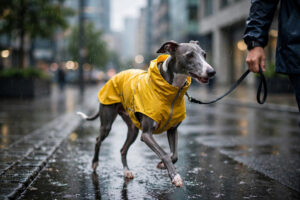
9. A light rain layer
Tropical weather doesn’t ask permission. A sudden downpour mid-walk means a soaked, shivering dog — and a soaked, fragrant car or lift ride home.
What to look for: a lightweight, quick-dry rain coat that covers the back without restricting leg movement. Measure chest girth, not just weight, when sizing — dog coat sizes are glorified guesses.
Who should skip it: dogs with thick double coats who genuinely don’t care, and the “business and dash” types who’d rather sprint home than stroll in the rain. Know your dog.
10. The bag itself
All of the above needs a home, or half of it stays on the counter. A small crossbody bag — the kind cyclists and runners use — keeps treats, bags, phone, keys, and the collapsible bowl in one grab-and-go place.
What to look for: crossbody (not a tote that slides off), water-resistant, with a dedicated easy-access pocket for poop bags. If putting it on feels like a chore, it’s the wrong bag.
What to skip
Retractable leashes — covered above, but it bears repeating: they’re a liability in traffic, crowds, and lifts.
Choke chains and prong collars — they “work” by causing discomfort, and in inexperienced hands they cause injury. A front-clip harness and consistent training get you the same result without the risk.
Gadget overload — GPS trackers have their place for escape artists, but most city dogs need the basics done well before they need tech. Master the ten essentials first.
The full kit checklist
| Item | Why it matters | What to look for |
|---|---|---|
| Y-shaped harness | Protects neck and trachea | Front clip, 4+ adjustment points, two-finger fit |
| 1.8 m leash | Control in traffic and crowds | Flat nylon/biothane, traffic handle, no retractables |
| Treat pouch | Rewards land in under 2 seconds | Stay-open mouth, waist clip, machine-washable |
| Poop bags | Non-negotiable city etiquette | Thick, tie handles, carry 3+ |
| Collapsible bowl | Dogs overheat fast | Silicone, flattens to nothing |
| ID tag + microchip | Fastest way home | Engraved flat tag, chip details current |
| Reflective gear + LED | Visible after dark | Clip-on LED light, reflective trim |
| Paw balm | Hot pavement protection | Beeswax-based, five-second palm test |
| Rain layer | Sudden downpours | Quick-dry, sized by chest girth |
| Crossbody walk bag | Everything in one place | Water-resistant, easy poop-bag access |
Those daily walks are one of the two anchors in our guide to apartment living with a pet: the complete city guide, which also covers the indoor half of the routine — enrichment, noise, and what your dog does while you are at work.
Frequently asked questions
How long should a city walk be?
It depends on breed, age, and fitness — a young border collie and a senior pug have very different needs. As a rough guide, most healthy adult dogs do well with 30–60 minutes of walking a day, split into two outings. Puppies need shorter, more frequent outings. Watch your dog, not the clock: lagging behind or lying down means enough.
Is it okay to walk my dog at noon?
Try not to. Midday heat plus hot pavement is rough on dogs, especially flat-faced breeds and seniors. If noon is your only option, stick to grass and shade, keep it short, bring water, and do the five-second palm test on the pavement first.
Do small dogs need harnesses too?
Especially small dogs. Tiny breeds are more prone to tracheal issues, and a collar on an excited 3 kg puller concentrates a lot of force on a very small neck. A lightweight, well-fitted harness is one of the best things you can buy a small dog.
Can I let my dog off leash in the park?
Only in designated dog runs or explicitly off-leash areas — and only if your dog’s recall is genuinely reliable around distractions, not just reliable in your living room. Everywhere else, the leash stays on. It’s the law in most cities, and it’s what keeps everyone (including your dog) safe.
My dog pulls like a sled dog. Will a harness fix it?
A front-clip harness will make pulling less rewarding and walks more manageable immediately — but it’s a management tool, not a training plan. The actual fix is consistent training: reward the position you want, stop or change direction when they pull, and practice in boring places before busy ones. For serious pullers, a session or two with a qualified trainer is money well spent.
Start with the harness and leash, add the rest over a few weeks, and pay attention to what your dog actually responds to. The best kit isn’t the most expensive one — it’s the one that’s on you every single time you clip the leash on.
This article was created with AI assistance and reviewed by our editorial team before publishing.
 Rainy Day Dog Walking Gear for City Streets
 Cat Harness and Leash Guide for City Walks
 Apartment Living With a Parrot: Noise, Space, Neighbours