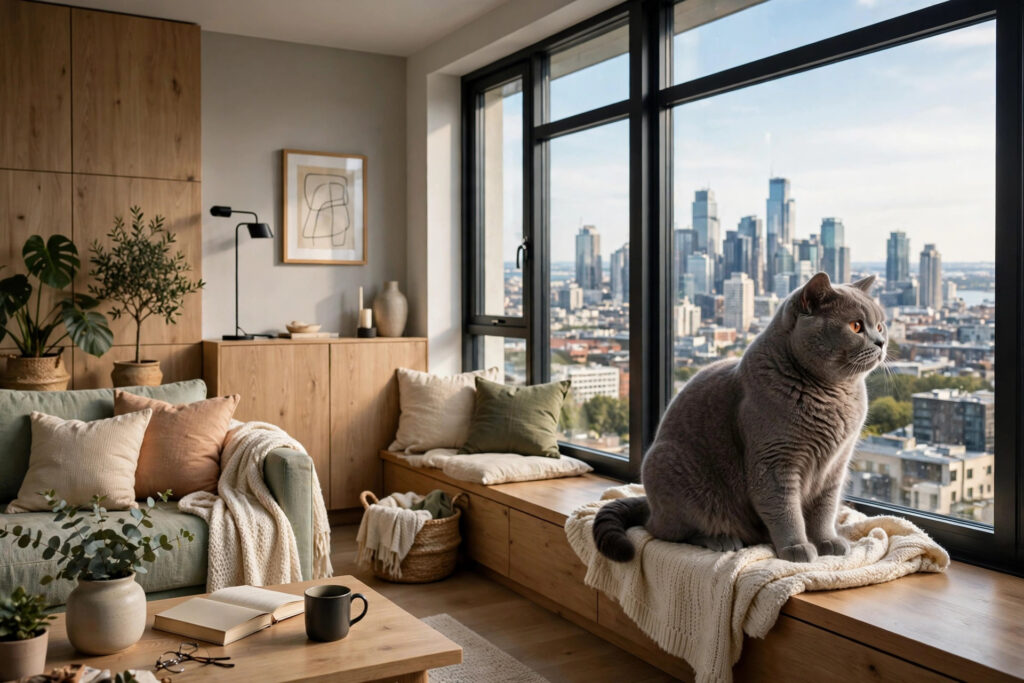
An indoor cat in a small apartment doesn’t need more floor space. She needs height, choice, and a routine she can predict. Give her places to climb, scratch, hide, and watch the world, put the litter box somewhere quiet, and play with her every day. That’s the formula. Simple, and it works.
Think vertical, not floor space
Cats read a room in layers. You see a sofa and a rug. Your cat sees the floor, the seat, the back of the sofa, the shelf above it, and the top of the bookcase — five different levels, five different moods.
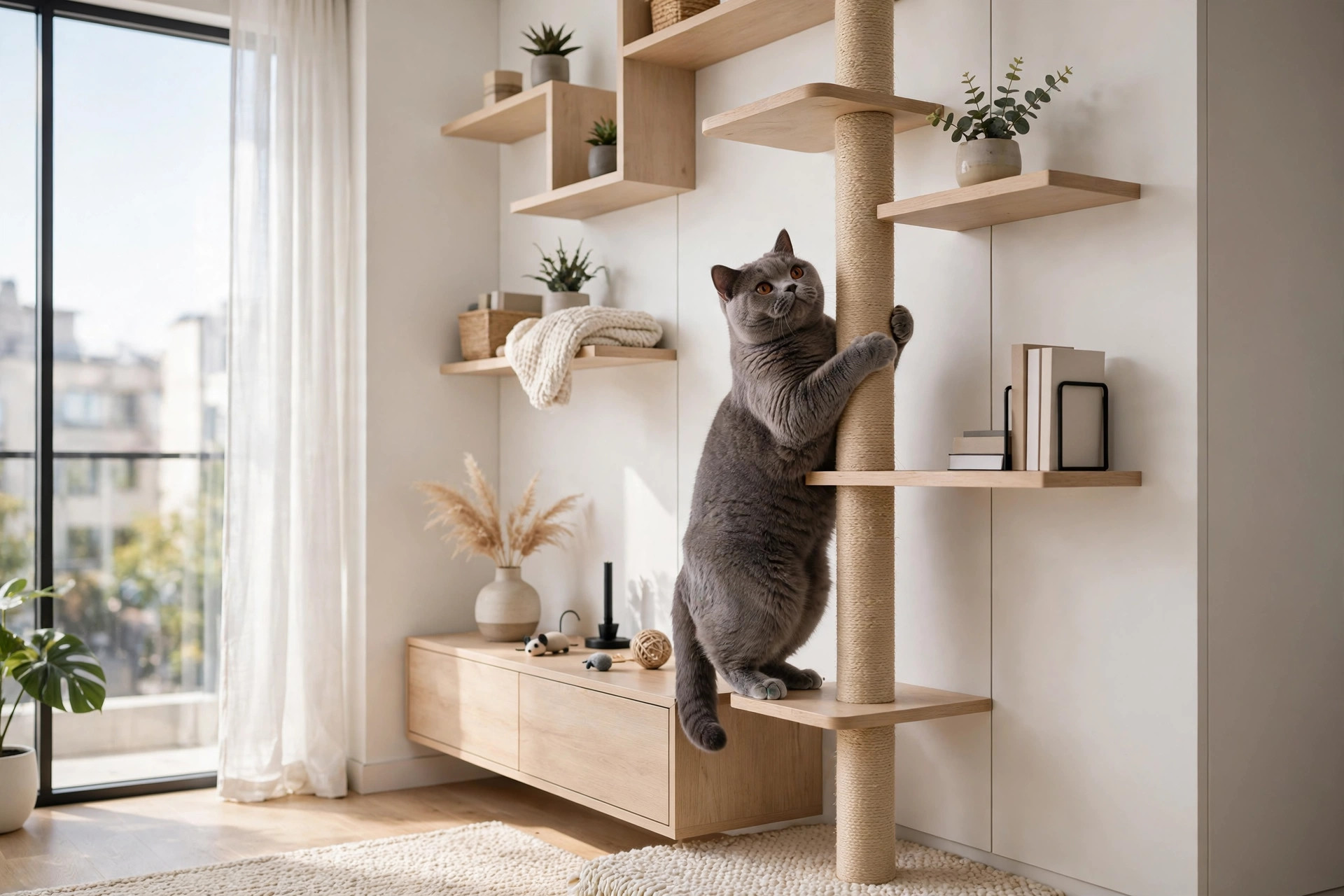
So build up. You don’t need to fill the flat with furniture. You need one clear route up, and one good spot at the top.
- A tall cat tree by a wall, with at least one platform wide enough for a proper stretch-out nap
- Two or three wall shelves in a staggered line, so she can step up instead of leaping
- A clear windowsill, bookcase top, or wardrobe top she is allowed to use
- A scratching surface on the way up, not hidden in a corner she never visits
British Shorthairs help you here. They’re solid, calm cats who like a sturdy perch more than a daredevil jump. Pick shelves and trees that don’t wobble. A wobbly post gets used once, then ignored. Fair enough, really.
Litter box placement without the smell taking over
Bad litter placement causes most small-flat headaches. Too exposed, and your cat hates it. Too hidden, and you forget to clean it. Both end badly.
Choose a quiet, low-traffic corner with a bit of airflow. A bathroom corner, a hallway alcove, or the space beside a washing machine can all work, as long as it’s not right next to her food and water. Cats don’t like eating beside a toilet. Neither do you.
Make a small spot work harder
A lidded box, a mat that traps litter, and a small lidded bin nearby will save you daily faff. Scoop daily. Wash the box regularly with unscented cleaner, and rinse it well.
Strong scents are a trap. A heavily perfumed litter or spray might smell better to you for an hour, but it can put your cat off using the box at all, according to guidance from Cats Protection on litter tray behaviour. Plain and clean beats floral and ignored. Every time.
If you have one cat, one good box in the right place can work, though a second box helps if you have the room. No room? Then location and cleaning matter even more.
Scratching that saves your sofa
Scratching isn’t bad behaviour. It’s maintenance, marking, and a full-body stretch in one go. Your job isn’t to stop it. Your job is to give her a better place to do it than the arm of your sofa.
Put a post where she already wants to scratch. That’s usually near where she sleeps, near the sofa, or near the door she greets you at. A post in a spare corner nobody uses? She won’t use it either.
- Go tall enough for a full stretch, and heavy enough that it doesn’t tip
- Try sisal if she likes rough textures, carpet or cardboard if she prefers something softer
- Add a flat cardboard scratcher too — some cats scratch down, not up
- Praise and play near the post when she uses it, so the habit sticks
Cover the sofa corner she loves, just for a while, and put the post right in front of it. You’re redirecting traffic. Once the new spot becomes the habit, you can move the cover.
Window perches and quiet hideaways
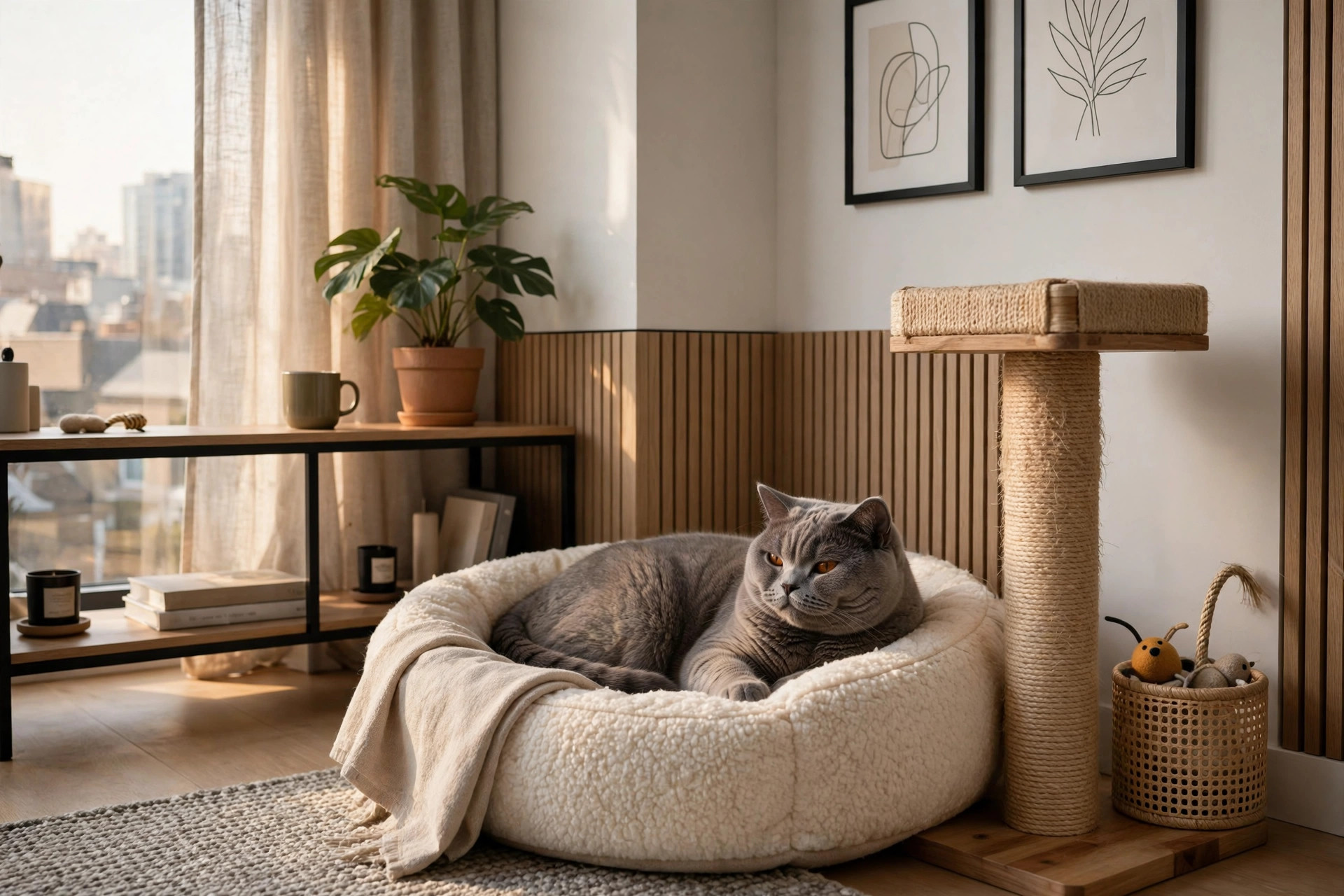
A window is television for an indoor cat. Birds, people, weather, a leaf doing something suspicious — she’ll watch it all. A wide perch or a cushion on a deep sill can become the centre of her day.
Make it comfortable and safe. Check the window shuts properly, keep cords tied up and out of reach, and don’t leave a top window wide open in a room she uses alone. If you open windows for air, a secure screen or a small opening she can’t fit through is the safer choice.
Every cat also needs somewhere boring
Not every spot should be exciting. She also needs a hideaway where nothing happens. A box with a blanket inside. A bed under a side table. A covered den in a quiet corner.
Don’t drag her out of it. Don’t let guests drag her out of it either. A cat who knows she can leave a noisy room and be left alone is a calmer cat, and she’s far more likely to come back out on her own. Choice calms cats down. Being cornered doesn’t.
Play, feeding, and enrichment that doesn’t get stale
Boredom in a small flat doesn’t look dramatic at first. It looks like night-time zoomies, ankle ambushes, chewing, or a cat who sleeps all day and then can’t settle. Play fixes a lot of it.
Short sessions work best. Ten minutes with a wand toy before breakfast. Another burst in the evening. Let her stalk, chase, catch, and finally grab the toy, then offer food or a small treat so the hunt feels finished. Don’t just wave a toy vaguely while you scroll your phone. She knows. She always knows.

Rotate, don’t accumulate
You don’t need a mountain of toys. You need a small rotation.
- Put out three or four toys at a time
- Swap them every few days for ones she’s not seen in a while
- Keep one puzzle feeder or treat ball in the mix
- Save the wand toys for play with you, and put them away afterwards
Cardboard boxes, paper bags with the handles removed, and a scrunched ball of paper often beat expensive toys anyway. Typical. Use what she actually plays with, not what looks cute in a basket.
Feeding can do enrichment work too. Scatter a few pieces of dry food for her to find, or use a puzzle feeder a few times a week. Just keep her total food the same — enrichment isn’t an excuse for extra meals, especially for a British Shorthair who can gain weight quietly if snacks creep up.
Keeping neighbours happy, and your cat calm
You share walls, floors, and hallways with other people, wherever you live. A calm cat makes that easy. A stressed, bored cat at 3 a.m. doesn’t.
Soft-close the chaos. Put felt pads under a cat tree on a hard floor, play the wild games earlier in the evening rather than late at night, and keep litter and food waste sealed before it goes out. If your cat yowls at night, look for the cause — hunger, boredom, and a dirty litter box are common places to start. If it’s new or persistent, talk to your vet instead of guessing.
Hallway smells matter too. Your neighbours shouldn’t be able to tell you have a cat from the corridor. That’s the test.
Plants, chemicals, and the safety checks people miss
Small flats concentrate risk. Cleaning sprays live under the same sink as everything else, houseplants sit at cat height, and there’s nowhere she can’t reach if she really tries.
Store cleaning products, laundry capsules, and medicines in closed cupboards. Wipe surfaces after you use strong cleaners, and keep her out of the room until they’re dry. Don’t leave essential oil diffusers running in a closed room with her — oils can irritate cats, and she can’t open a door to leave.
Plants need a check before they come home, not after. Lilies are a well-known danger for cats, according to the ASPCA’s toxic plant guidance, and even a pretty windowsill plant can be a problem if she chews it. If you’re not sure about a plant already in your flat, look it up before you move it within reach.
🐾 Not sure if a plant is safe for your cat? Check the lily plant safety page on Eaoae — a free reference checker, not a substitute for vet advice. If your cat has eaten something and you’re worried, call your vet right away.
A simple daily rhythm that actually works
You don’t need a colour-coded schedule. You need a few anchors she can count on.
- Morning: fresh water, breakfast, a quick litter scoop, five to ten minutes of play if you can
- While you’re out: a window perch, a hideaway, a puzzle feeder, and a few toys left out
- Evening: the bigger play session, dinner, another litter check, and a calm wind-down on the sofa
- Weekly: wash bowls, check scratching posts for wear, rotate toys, and look over plants, cords, and cupboard latches
That’s it. No grand system. Just height, a clean litter spot, something good to scratch, a window to watch, play every day, and a home that doesn’t surprise her. A small apartment stops feeling small when every corner has a job — and your cat will be the first to tell you, usually by falling asleep right in the middle of it.
This room-by-room setup is one piece of a bigger routine. Our guide to apartment living with a pet: the complete city guide pulls the rest together — leases, noise, indoor exercise, balcony safety, and how pets cope when you are out.
Frequently asked questions
Can a cat be happy living only indoors in a small apartment?
Yes, if her needs are met inside. Give her vertical space, scratching spots, a quiet litter area, window access, and daily play. Watch her appetite, energy, and litter habits, and talk to your vet if her behaviour changes suddenly.
How do I stop litter smell in a small flat?
Scoop daily, wash the box regularly with unscented cleaner, use a mat to trap stray litter, and keep waste in a sealed bin. Put the box somewhere quiet with some airflow, away from her food. Clean and plain works better than strong scents.
What does a British Shorthair need in an apartment?
Sturdy perches and scratching posts that don’t wobble, a calm hideaway, and regular play to keep her active. British Shorthairs are generally calm and solid cats, so stable furniture and a predictable routine suit them well.
How often should I play with an indoor cat?
Aim for short play sessions every day — for example, a brief session in the morning and a longer one in the evening. Let her stalk, chase, and catch the toy, then finish with food or a small treat so the session feels complete.
This article was created with AI assistance and reviewed by our editorial team before publishing.
 Apartment Living With a Parrot: Noise, Space, Neighbours
 Apartment Living With a Pet: The Complete City Guide
 Apartment Balcony Safety for Cats: A Complete Setup Guide