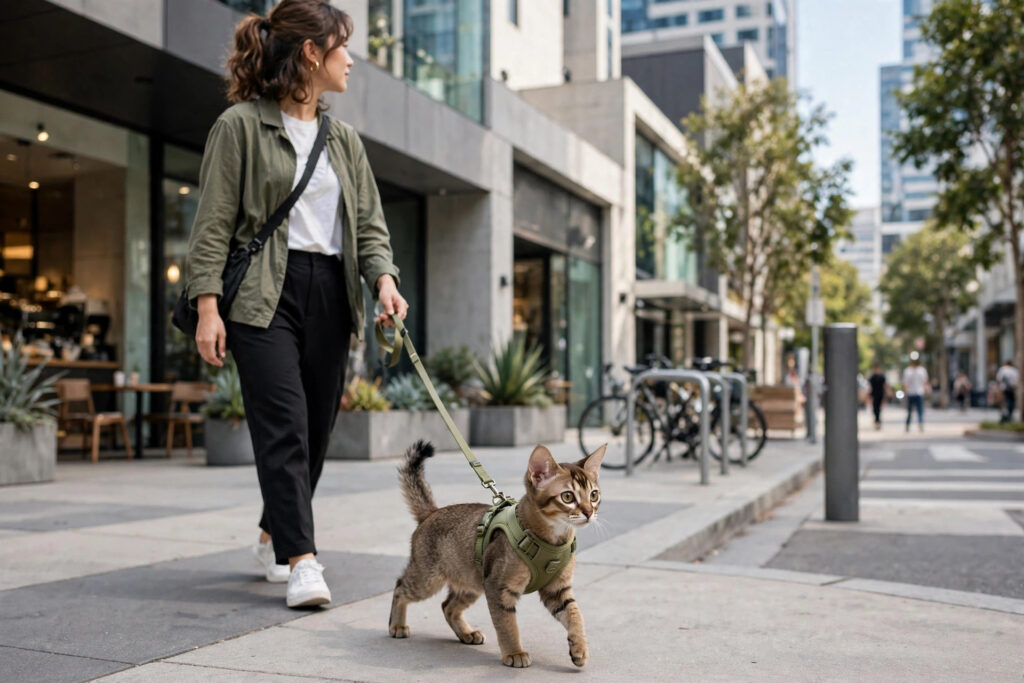
A cat harness only works if three things line up: the fit is snug without squeezing, your cat has practised indoors first, and you pick quiet routes at quiet times. Skip the practice stage and most cats freeze, flop or wriggle free. Do it in stages and a city walk can become the best part of your cat’s day.
Which harness style suits city walks?
You’ll see three main styles in shops. They are not equal, and for city use the differences matter.
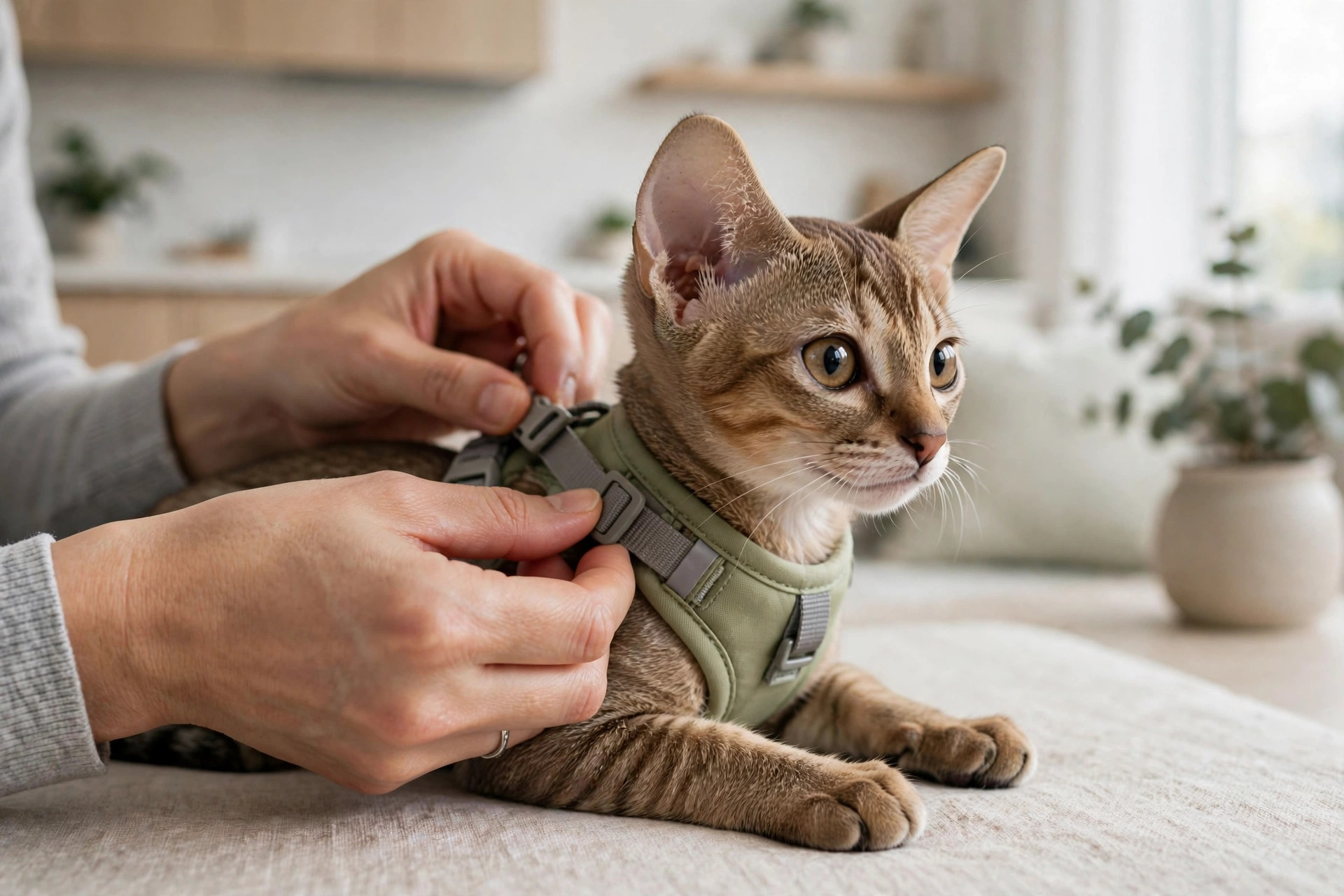
Vest-style harnesses wrap around the chest and fasten with wide straps. They spread pressure across the body, which most cats tolerate better, and they’re the hardest style for a cat to back out of. For busy pavements, start here.
H-style harnesses use two thin straps joined along the back. They’re light and cheap, and fine for a calm cat in a garden. In a street setting, though, a startled cat can slip a leg and twist out faster than you’d expect.
Jackets cover more of the body and fasten along the back. Some anxious cats actually settle in them, a bit like a gentle hug. Others hate the coverage. You won’t know until you try one indoors.
Whatever the style, look for a leash attachment point on the back, breathable fabric, and fastenings you can open fast. Never attach a leash to a collar alone — the ASPCA advises against walking cats on a collar and leash because a cat can slip the collar or injure its neck if it bolts.
Fit: the two-finger rule
Measure your cat’s chest just behind the front legs, not the neck. Most harness size charts work off that chest measurement, and guessing from weight alone lands a lot of owners with the wrong size.
Fastened up, the harness should let you slide two fingers between the fabric and your cat’s body — snug, not tight, and not loose enough to shift sideways. Check three escape points:
- The neck opening: can your cat pull its head back through it? If yes, it’s too big.
- The chest strap: does it ride up into the armpits when your cat walks? Adjust or resize.
- The belly strap: does it stay put when your cat sits, twists and lies down?
Singapuras and other small, fine-boned breeds often need the smallest size even as adults — the Cat Fanciers’ Association describes the Singapura as a small to medium cat, so don’t assume a standard size will fit. Measure, don’t guess.
Training indoors: the stage nobody should skip
Here’s where most harness plans fall apart. The harness arrives, the owner clips it on, and the cat gets carried straight outside. New gear, new place, new noises — all at once. Too much.
Do it in layers instead:
- Days 1–2: Leave the harness near your cat’s bed and feeding spot. Let it pick up familiar smells. Reward any sniffing or rubbing against it.
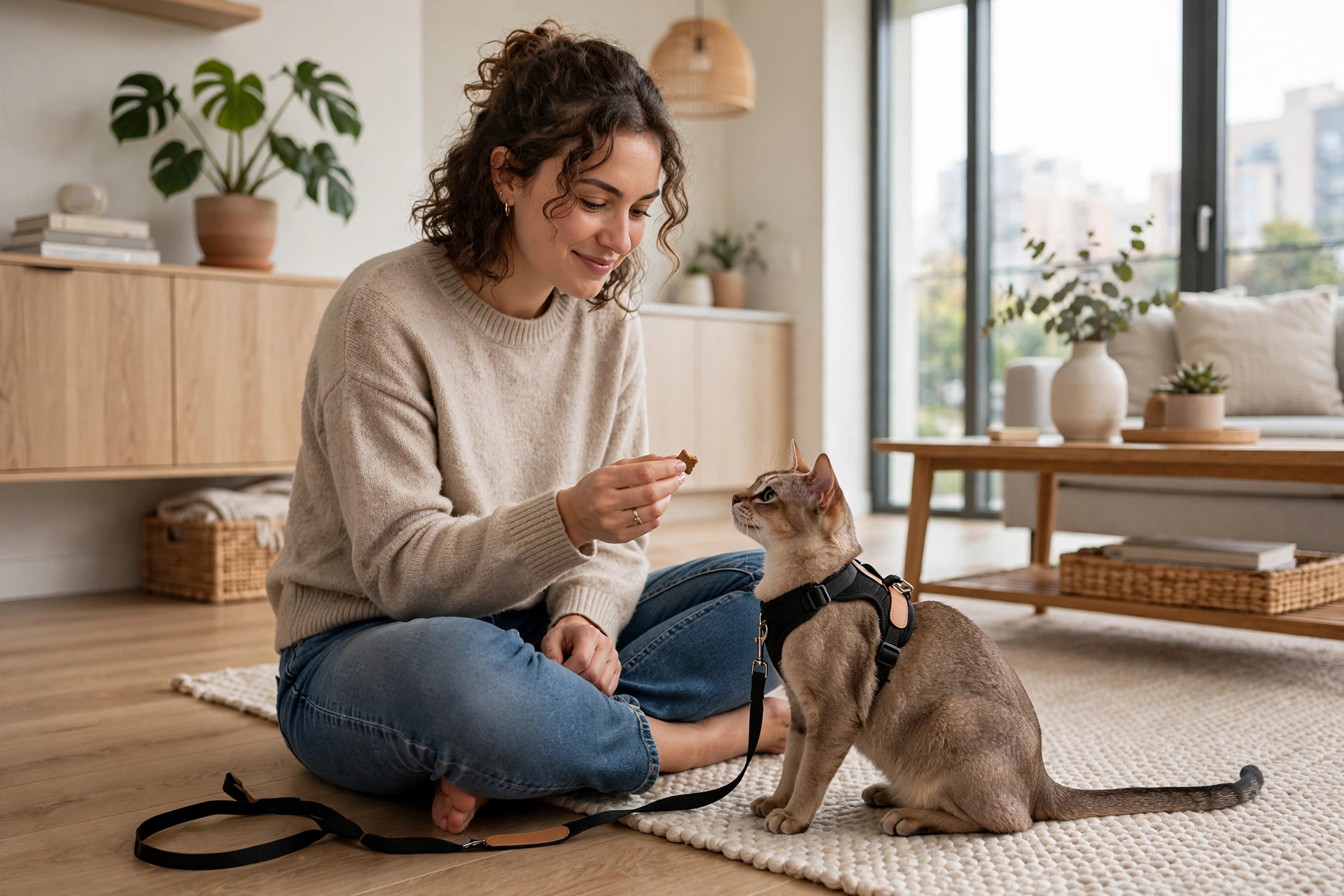
- Days 3–5: Drape it over your cat for a few seconds, then take it off and give a treat. Build up to fastening it, still indoors, for a minute or two of play or dinner.
- Week 2: Attach the leash and let it trail while your cat walks around at home. Pick it up loosely now and then. No steering yet.
- Then: Practise walking together indoors, following your cat at first, then gently guiding with treats.
Keep sessions short — a few minutes is enough at the start, and always end before your cat gets fed up. A cat that freezes or flops over in the harness isn’t being stubborn; that’s a stress signal, so take a step back and try again tomorrow.
Your first routes: quiet beats interesting
Your cat doesn’t need a tour of the neighbourhood. It needs one boring, predictable route it can learn.
Pick a quiet side street, a courtyard, a green verge or a low-traffic park path. Go at quiet times — early morning or later evening in most neighbourhoods — and keep the first outing to ten minutes or so. You can build from there.
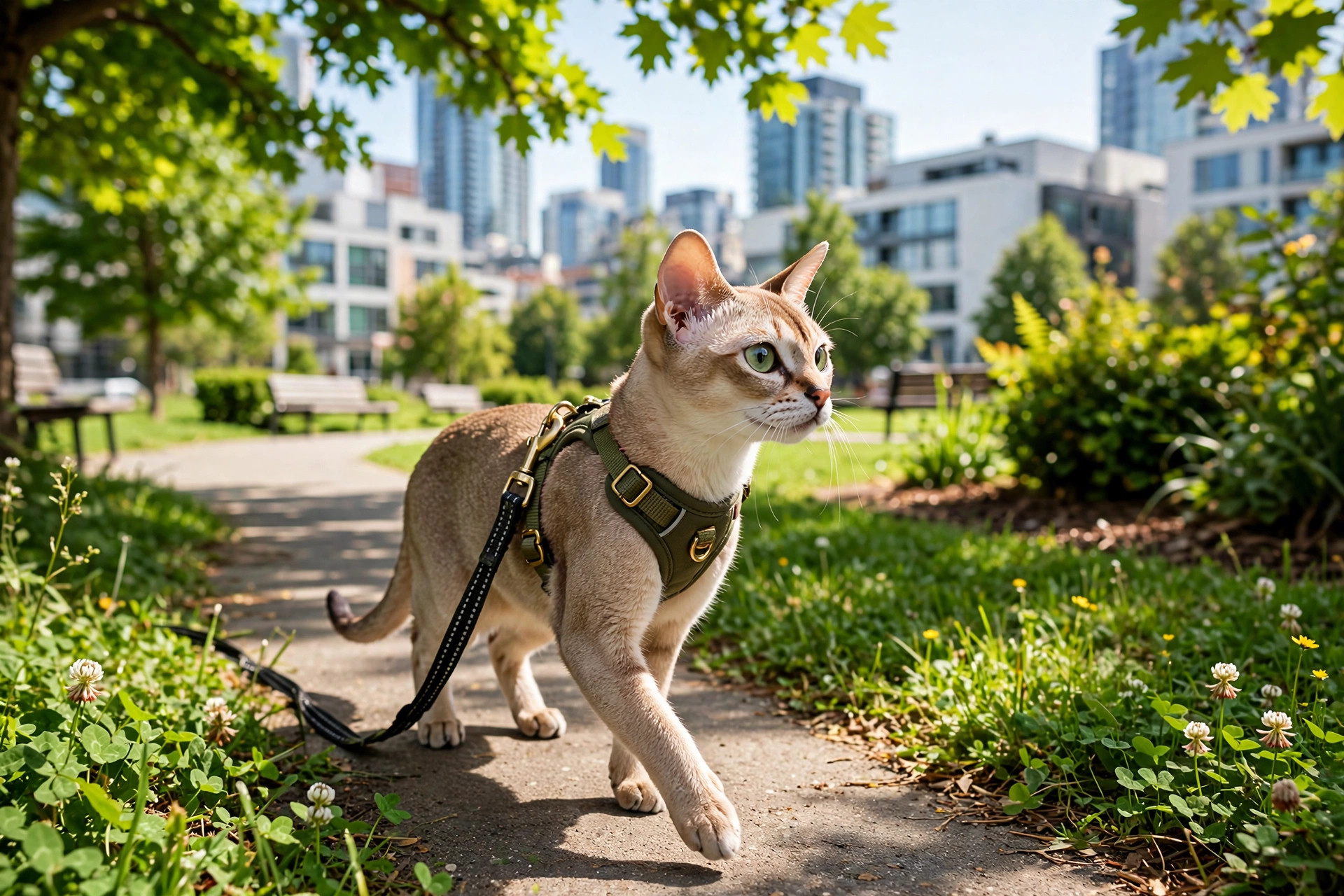
Walk at your cat’s pace, which will involve a lot of stopping, sniffing and sitting. That’s not a failed walk; that IS the walk, from a cat’s point of view. Let your cat choose direction where it’s safe, and use the leash as a boundary, not a steering wheel.
Watch the body language. Ears flat, tail low and lashing, crouching, or trying to bolt for cover? Head home. Walks should end while your cat is still coping, not after it’s overwhelmed.
City hazards to plan around
City walks come with a short list of predictable problems. Plan for them and they’re mostly non-events.
Dogs. Assume every off-lead dog will rush up. Know your pick-up move: scoop your cat calmly, turn side-on, and move away. Practise the scoop at home so it isn’t a first-time grab outdoors.
Noise. Sirens, scooters, bin lorries. You can’t control them, but a familiar route means fewer surprises, and most cats settle once they know a sound’s pattern.
Escape artists. A frightened cat pulls backwards, which is exactly how loose harnesses fail. That’s why fit matters, and why a back-clip vest beats a thin strap set on streets.
Heat and cold. Pavements get hot in summer and gritted or salted in winter in some places. If you wouldn’t walk barefoot on it, keep the walk short or skip it, and wipe paws when you get home.
Bring a carrier, even for short walks
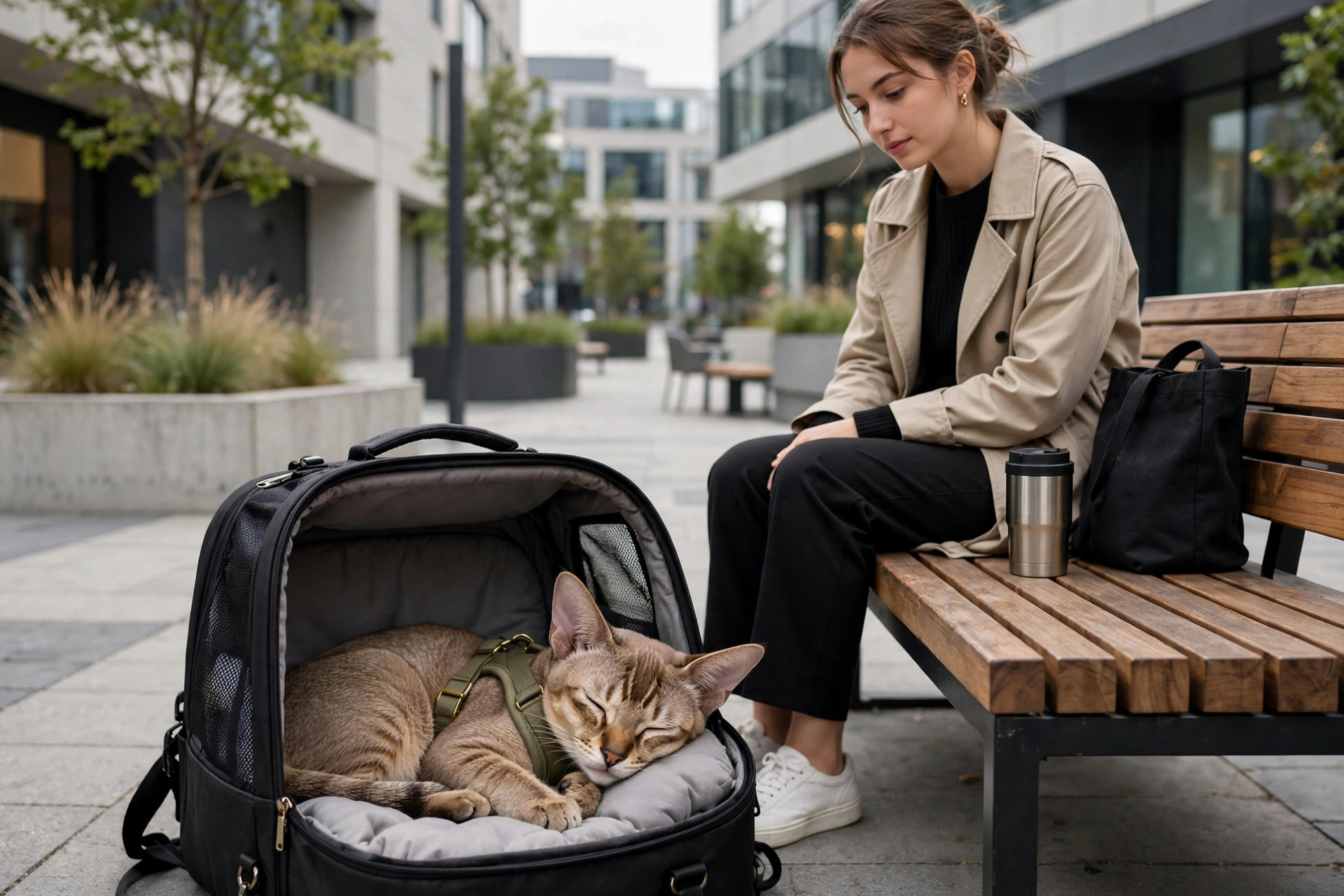
This sounds like overkill until the day it isn’t. A backpack or shoulder carrier gives your cat a familiar, enclosed base to retreat into when a street gets busy, a dog appears, or your cat simply decides it’s done.
Train the carrier the same slow way: leave it open at home, feed treats inside it, and let your cat nap in it. Outdoors, some cats happily alternate — walk a stretch, ride a stretch. That’s a perfectly good outing.
Pack light otherwise: treats, a phone, waste bags if your cat uses a verge, and water on warm days. That’s it. You’re walking a cat, not moving house.
Not every cat wants this — and that’s fine
Be honest about the cat in front of you. Bold, curious cats who already watch the street from the window are good candidates. A nervous cat who hides from visitors may genuinely prefer window perches, a catio, or indoor play — and forcing walks helps nobody.
Try the indoor stages and read the answer your cat gives you. Relaxed eating, playing and tail-up exploring in the harness? Keep going. Persistent freezing, hiding or struggling after a week of gentle practice? Take the hint, kindly.
The goal was never the walk itself. It’s a richer day for your cat — and there are plenty of ways to build one.
Harness walks give an indoor cat real outdoor exercise, and they slot into the wider routine in our guide to apartment living with a pet: the complete city guide — vertical space, play sessions, safety checks, and calm alone time included.
Frequently asked questions
How long does harness training take?
Most cats need one to two weeks of short indoor sessions before a first outdoor walk. Some confident cats are ready in a few days; shy cats may need longer. The pace is set by your cat’s body language, not the calendar.
Can I walk my cat on a collar and leash instead?
No — the ASPCA advises against it, because a cat can slip a collar or hurt its neck if it lunges. A properly fitted harness spreads pressure across the chest and is far harder to escape from.
What if my cat just lies down in the harness?
Freezing or flopping is a common stress response, not defiance. Shorten the session, reward any movement, and try again the next day. If it keeps happening after a week of gentle practice, your cat may simply not enjoy harness time.
How far should a cat walk in the city?
Start with ten minutes on one quiet route and build slowly. Distance matters less than calm repetition — most cats do better walking the same familiar loop than covering new ground every outing.
This article was created with AI assistance and reviewed by our editorial team before publishing.
 Rainy Day Dog Walking Gear for City Streets
 10 City Dog Walking Essentials Every Urban Pup Needs
 Apartment Living With a Parrot: Noise, Space, Neighbours