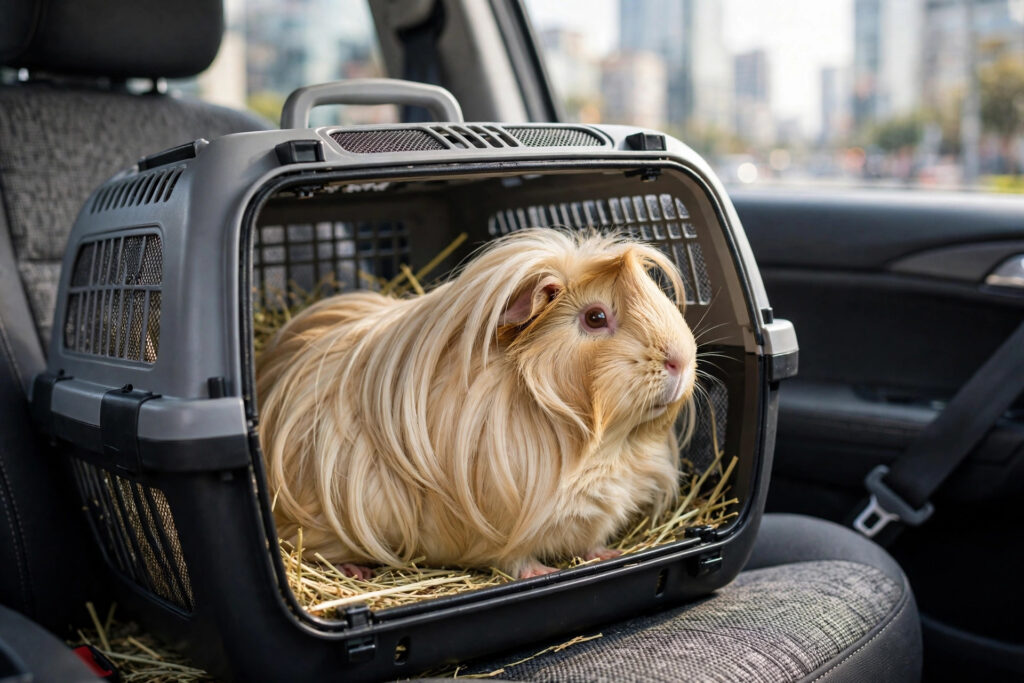
Yes, travelling with a guinea pig can work well, and most pigs handle short, calm journeys just fine. The trick isn’t luck. It’s a secure carrier stuffed with familiar hay, steady access to water, a cool and quiet ride, and a routine that feels like home from the first mile to the last.
Can guinea pigs travel?
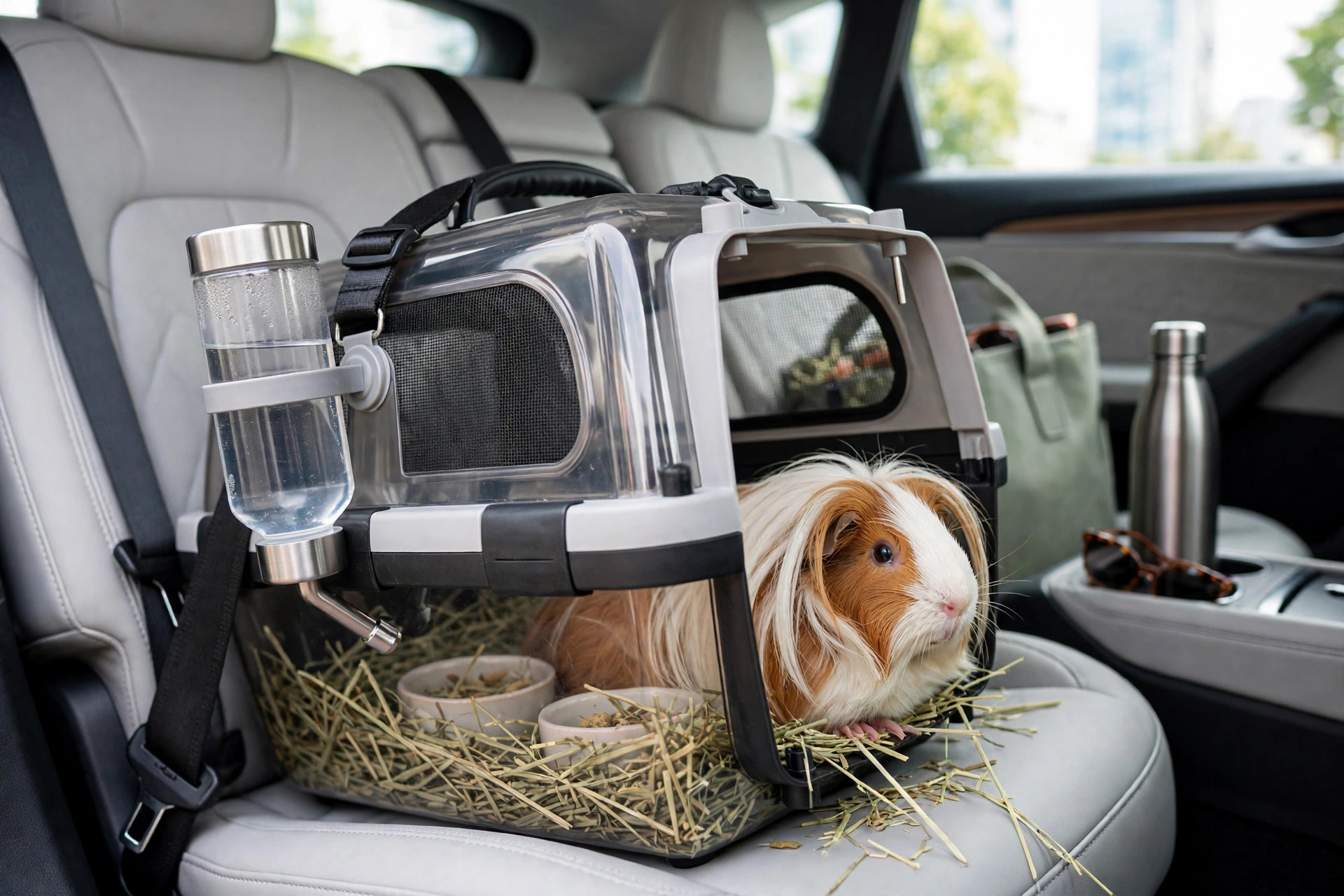
Yes, guinea pigs can travel, and short trips in a secure, hay-filled carrier are usually the easiest kind. Keep the ride cool, quiet and steady, bring the food and bedding your pig already knows, and plan gentle breaks on longer drives. For very long hauls or a nervous pig, a trusted sitter at home can be the kinder choice.
Short trips suit them best
A quick run across town is a different thing from a full day on the road. Short trips mean less noise, fewer jolts and less time away from the usual hay, water and hiding spots. Long hauls ask much more — the carrier stops feeling like a den and starts feeling like the whole world. If the journey is long, build in quiet breaks and keep checking that your pig is eating and drinking as usual.
The carrier does the calming
Most of the calm comes from the box itself. A snug, secure carrier that doesn’t slide, rattle or swing tells your pig the world is stable, even while it moves. Line it with bedding that smells like home, and add a small hide — a pig who can tuck away copes far better than one left exposed. Keep the carrier latched the whole way. Guinea pigs startle fast, and an open top is an escape waiting to happen.
Food and water can’t pause
Guinea pigs graze. They don’t do well with long gaps and an empty stomach, so travel food isn’t a treat — it’s the plan. Pack plenty of the hay your pig eats every day, plus the usual fresh veg and a water bottle set up before you leave. Don’t swap in a brand-new food for the trip. New flavours plus a moving vehicle is a rough mix for a small stomach.
Sometimes staying home wins
Travel is optional, and staying put isn’t a failure. If your pig is elderly, unwell, pregnant, very shy, or simply hates being handled, a trusted sitter who visits your home can be far kinder than any carrier setup. Some trips are for you, not for them — and it’s fine to say so.
What makes a good travel carrier?
A good travel carrier is secure, ventilated and boring in the best way: solid sides, a latch that can’t pop open, room to turn around and lie flat, and space for hay, bedding and a hide. Hard-sided carriers shrug off knocks. Soft-sided ones feel cosier but need a firm base so your pig isn’t riding on a slope.
Skip anything see-through on every side. A pig in a glass-clear box feels watched from all angles, and prey animals don’t relax like that. Mesh panels are fine — air moves, but the carrier doesn’t turn into a display case.
Size matters, but not in the direction people expect. In a big space your pig slides with every turn and brake, and sliding is scary. Snug and padded beats roomy and echoing — just leave room to stretch out fully and reach the hay. Test it at home first: carrier on the floor, hay inside, a few days of wandering in and out. By travel day it should smell safe and known.
Your journey, step by step
Here’s the whole trip as one simple timeline. None of it is hard. The order is what makes it work.
- Decide and book. First, ask whether the trip suits your pig at all. If you’re using any shared transport, check the operator’s pet policy before you book — rules on small pets vary by operator, and some don’t allow them at all.
- Practice with the carrier. Leave the carrier out at home for a few days with hay and a hide inside. Let your pig explore it at their own pace, with no trip attached.
- Pack the familiar. The usual hay, the usual veg, a water bottle, spare bedding, and a worn piece of fleece that smells like home. Pack extra hay. You’ll use more than you think.
- Load calmly. Set the carrier on a flat, secure spot where it can’t slide. In a car, wedge it or belt it so braking doesn’t send it forward. Keep it level and shaded.
- Set off quietly. Low voices, gentle music if any, no sudden stops you can avoid. Talk now and then so your pig hears a known voice.
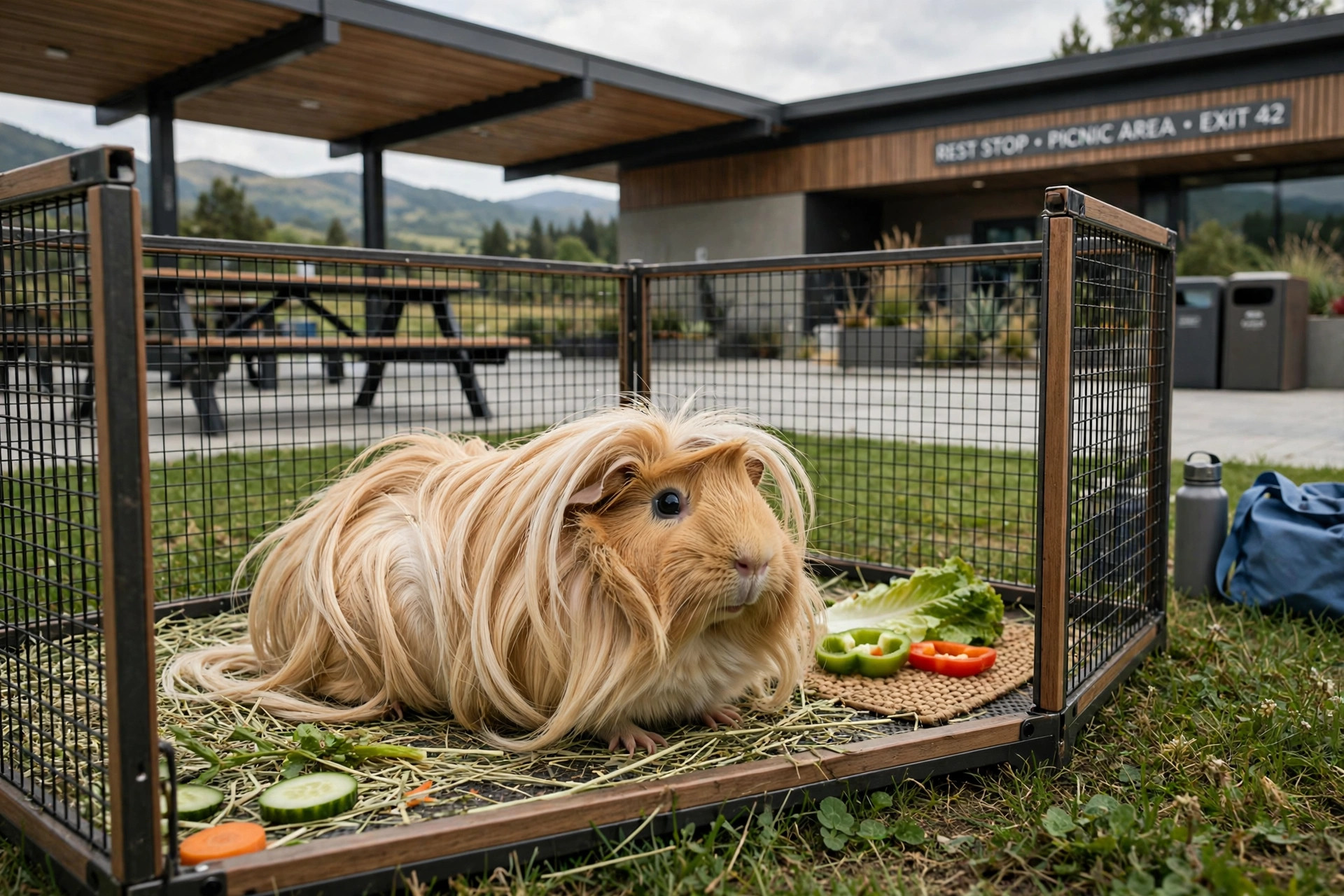
- Break gently. On longer drives, stop somewhere quiet. Offer water and fresh hay. A short grass break in a secure playpen works well, as long as the ground is clean, untreated and safely enclosed.
- Arrive and rebuild home. Set up the enclosure first, before you unpack anything else. Same layout, same hide, same hay. Then let your pig come out in their own time.
Food, hay and water on the move
Hay does three jobs at once on a trip. It’s food, it’s bedding, and it’s something normal to chew while the world rolls past. Stuff the carrier generously — your pig will eat it, burrow into it and hide under it.
For water, a bottle fixed to the carrier suits most trips, but bottles can drip or jam when they bounce. Check it at every stop. Juicy veg — cucumber, pepper, leafy greens your pig already eats — adds backup moisture along the way. Don’t rely on veg alone, though. Water should always be there, ready, not rationed.
Skip rich treats and new snacks for the road. Travel day is not the day to experiment. A bored pig with familiar hay is a calm pig. A pig with a funny tummy in a moving car is nobody’s idea of fun.
How do you keep a guinea pig comfortable in transit?
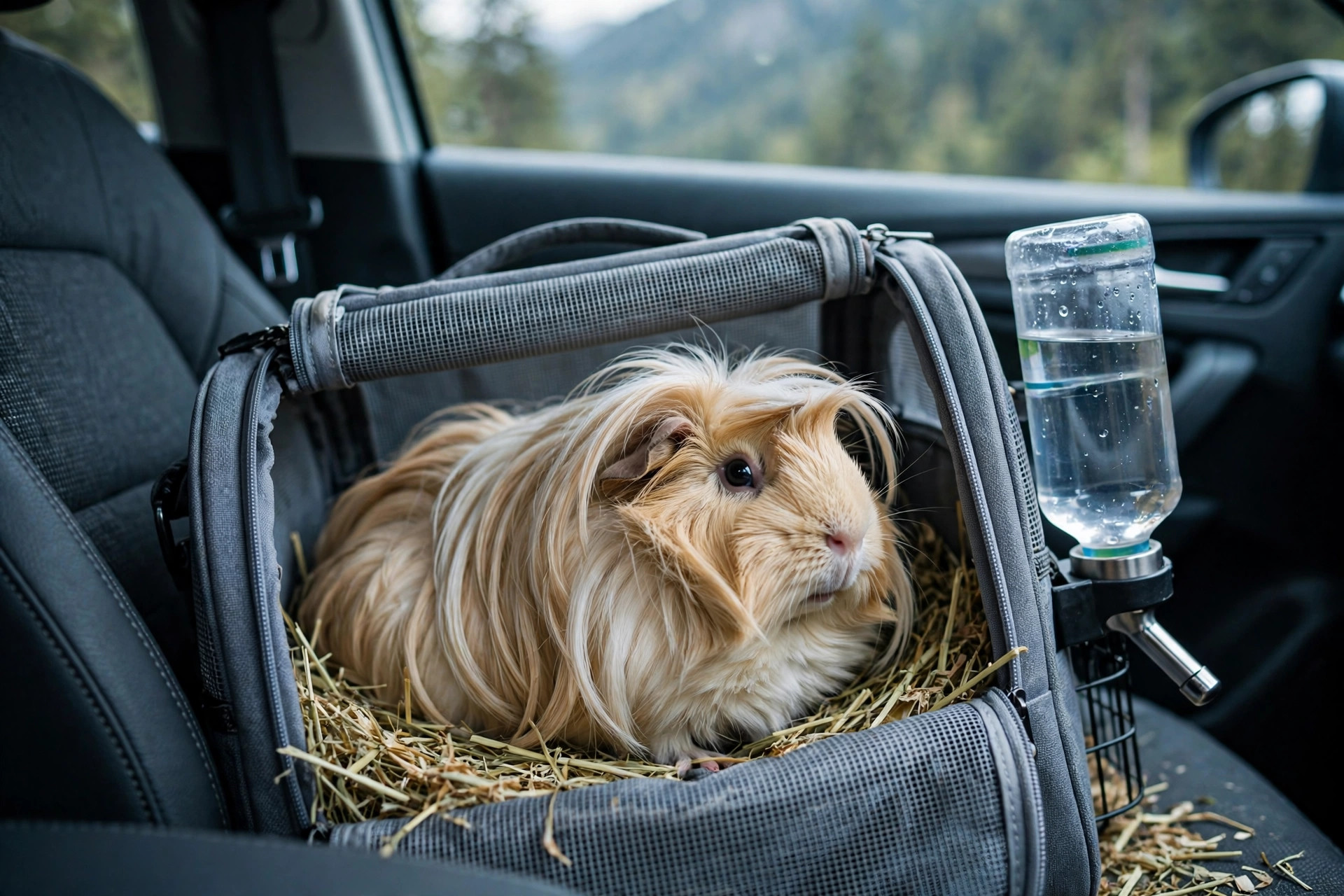
Keep your guinea pig cool, shaded and steady, because guinea pigs handle cold far better than heat and they stress quickly in a hot, stuffy carrier. Park the carrier out of direct sun, keep air moving gently around it, never leave your pig alone in a parked vehicle, and watch for heavy panting or a limp, stretched-out stillness — both mean stop and cool things down.
Heat builds fast in small spaces. A carrier on a sunny seat can turn uncomfortable while the rest of the car still feels fine to you. Shade it. Crack a window or keep the air flowing. If you’re hot in a t-shirt, your pig in a fur coat is hotter.
Cold is simpler. Extra fleece, a covered hide and a carrier tucked away from draughts will sort most chilly days. What pigs dislike most is swing — hot one hour, cold the next. Steady beats perfect. Aim for a ride that stays roughly the same from door to door.
Noise counts too. Loud music and barking dogs land harder on a small prey animal. Choose the quiet corner, cover part of the carrier with a light cloth, and keep your own voice low and boring.
Keeping the routine familiar
Guinea pigs run on routine. Same feeding times, same sounds, same smells — that’s their map of a safe world. Travel scrambles the map, so your job is to redraw as much of it as you can.
Bring the hide your pig sleeps in, not a new one. Bring bedding from the home cage, not a fresh bag. Feed at the usual times, even if you’re feeding in a parked car or a rented room. Small anchors, big effect.
At your destination, rebuild the setup before anything else. Same layout if you can. Hay in the usual corner, hide in its usual spot, water where it always is. Then step back. Most pigs explore, sniff everything twice, find the hay, and visibly relax.
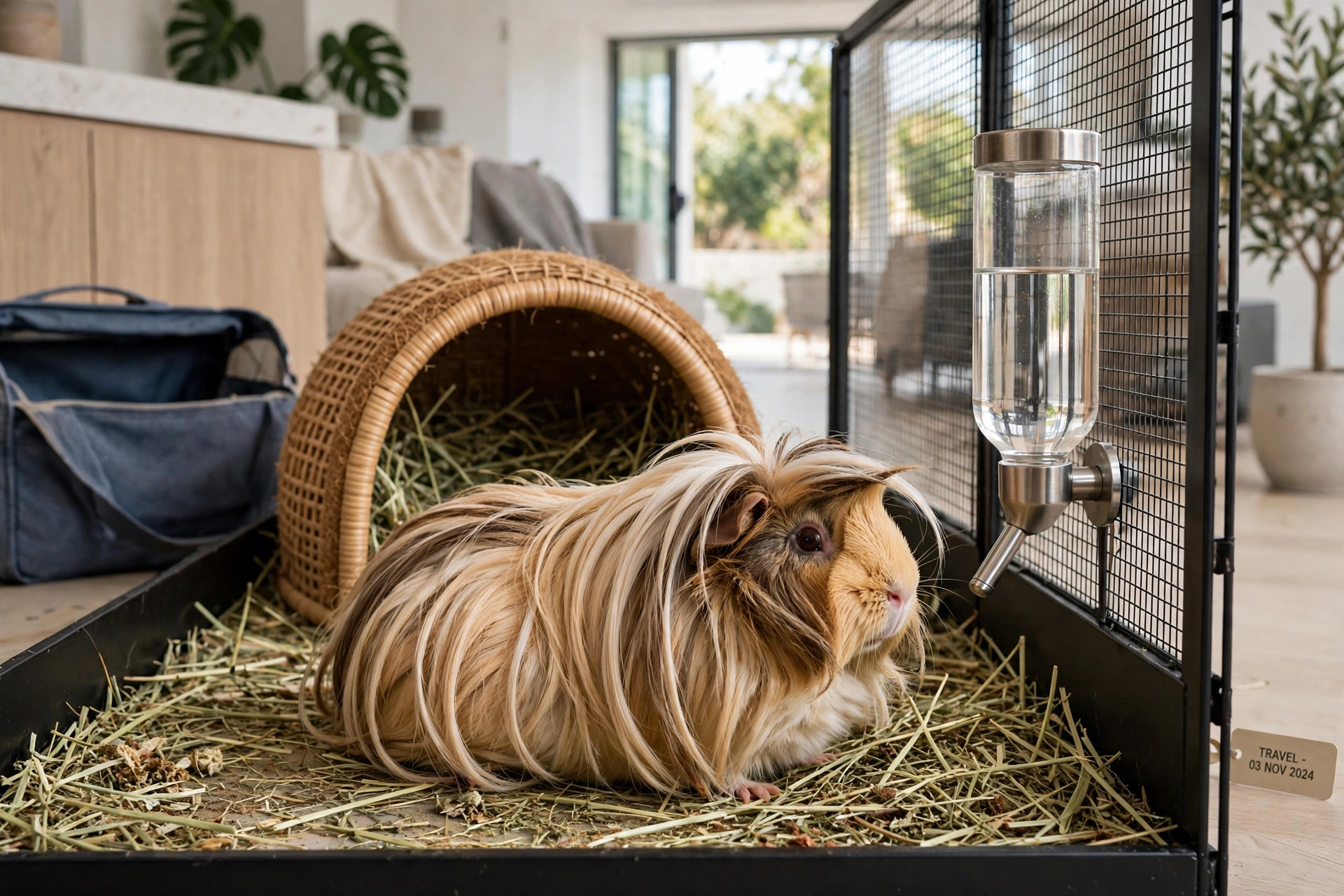
When a sitter is the kinder plan
Some trips just don’t suit a guinea pig, and spotting that early is good care, not giving up. A very long journey with lots of changes, a destination with no quiet space, extreme weather at either end — any of these can tip a manageable trip into a miserable one.
A trusted sitter who comes to your home keeps everything in place. The cage doesn’t move. The routine doesn’t change. Your pig may barely notice you were gone, and honestly, that’s the dream outcome.
Leave the sitter a simple sheet: what hay, what veg, how much, when, plus your vet’s contact details and what “not eating” should trigger — a same-day call to you and the vet. Guinea pigs hide illness well, so a sitter who knows your pig’s normal is worth a lot.
And if you do travel together? Let your pig’s behaviour grade the trip. Eating well, exploring, chatting away — good trip. Hiding for hours and refusing food — that’s feedback. Believe it, and plan the next one differently.
On-the-road questions, answered
Can I hold my guinea pig on my lap during the journey?
It’s safer not to. A startled pig can leap, and a lap offers no protection if the vehicle brakes or jolts. Keep your pig in the latched carrier for the whole journey, and save cuddles for quiet breaks in a secure, enclosed spot.
How long can a guinea pig travel in one go?
Short trips are easiest, and there’s no single limit that fits every pig — age, health and temperament all change the answer. Plan gentle stops on longer drives to offer water and hay, watch how your pig is coping, and let their behaviour, not the clock, decide whether to push on.
What should I do if my guinea pig stops eating while travelling?
Offer the most tempting familiar food you have — fresh hay and a favourite veg — in a quiet moment, and keep stress low. A pig who keeps refusing food needs a vet promptly, since guinea pigs shouldn’t go long without eating. Call your vet for advice the same day.
Can two guinea pigs travel together in one carrier?
A bonded pair who live together usually travel calmer side by side, as long as the carrier gives both room to lie down and reach hay without squabbling. Never pair up pigs who don’t already live together — travel day is no time for introductions.
Before you set off: the calm-trip checklist
- Carrier checked: latch firm, vents clear, base flat and padded.
- Bedding from home inside, plus the usual hide and a worn fleece.
- Plenty of everyday hay stuffed in, with more packed for the journey.
- Usual veg portioned, water bottle fitted and tested for drips or jams.
- Carrier placed level, shaded and secured so it can’t slide or tip.
- Operator’s pet policy checked, if you’re using any shared transport.
- Quiet breaks planned for longer drives, with a secure playpen for grass time.
- Destination enclosure ready to rebuild first, in the same familiar layout.
- Vet’s contact details saved, and a sitter briefed if plans change.
That’s the whole secret, really. A snug box, familiar hay, steady air, and a day that feels as ordinary as you can make it. Get those right, and travelling with a guinea pig stops being a worry and becomes just another quiet adventure you share.
This article was created with AI assistance and reviewed by our editorial team before publishing.
 Moving to the USA With Your Dog: The Full Prep Timeline
 Ferry Travel With a Small Dog: Deck, Carrier, Calm Crossings
 Booking a “Pet-Friendly” Stay? What to Check Before You Pay