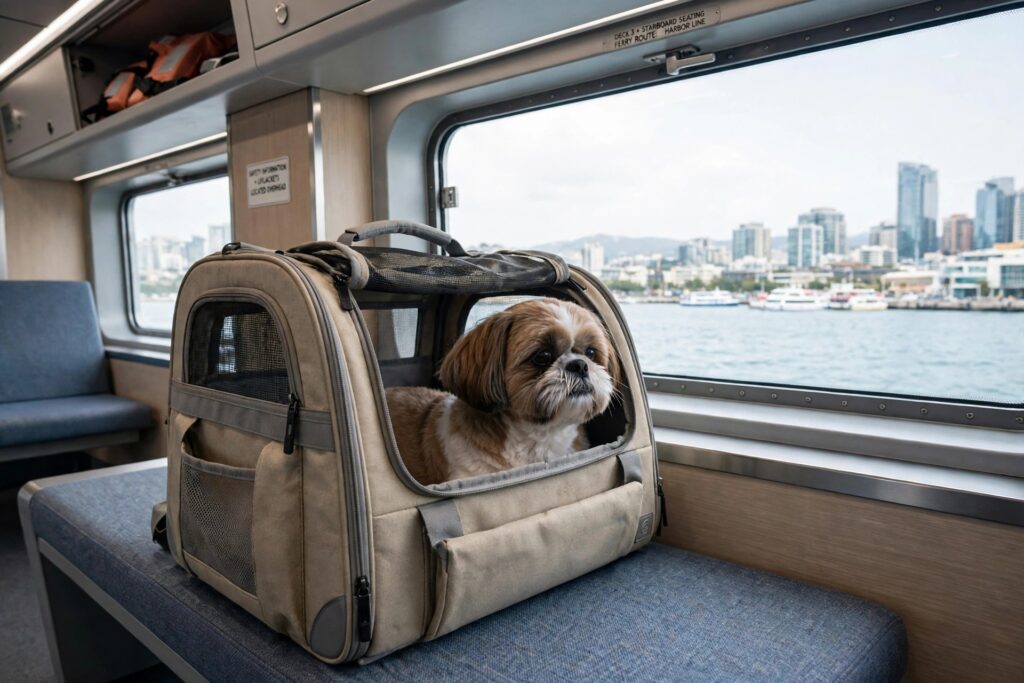
Ferry travel with a small dog can feel calm and manageable when you plan for the carrier, the crossing rules, and your dog’s comfort at sea. Choose a secure carrier your dog already trusts, confirm pets are allowed before you book, pack water and cleanup basics, and keep routines steady from dock to deck.
How do you prepare a small dog for a ferry crossing?
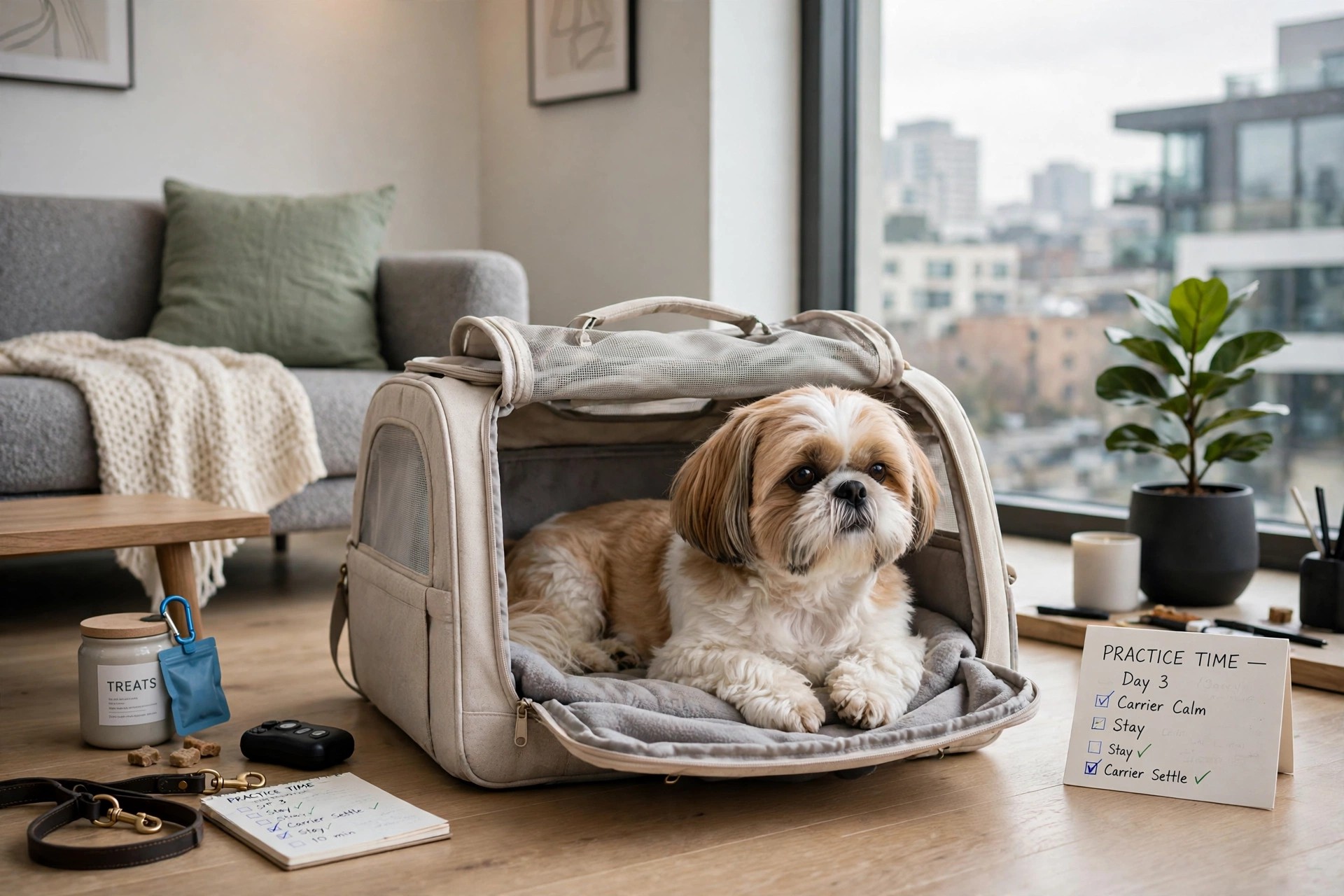
Start at least a week early with three steps: let your dog rest and enjoy treats inside the open carrier at home, add short practice outings so the carrier means calm time, and check health, ID, and operator rules before sailing day. A dog that already trusts the carrier will settle faster once the ferry leaves the dock.
Spread the work out so nothing feels rushed on sailing morning. Dogs learn by repetition, and a Shih Tzu is no different — short, boring practice beats one long session.
Let the carrier become furniture first
Put the carrier in a room where your dog already relaxes. Leave the door open. Toss a soft blanket inside, one that smells like home.
Feed a few treats in there. Let your dog wander in and back out. You’re not shutting the door yet.
After a day or two, close the door for a minute while your dog chews something tasty. Then open it again. Build the time up slowly — five calm minutes today teaches more than thirty tense minutes tomorrow.
Add movement before you add water
Once the carrier feels normal at home, carry it around the house for a bit. Then try a short walk with your dog inside, if your carrier allows it.
Next, a brief car ride can help. Your dog learns that movement plus carrier still ends well. Skip the busy terminal for now — noise, crowds, and rolling suitcases can overwhelm a small dog fast.
If your dog pants, whines nonstop, or tries hard to escape, you’ve moved too fast. Drop back a step. There’s no prize for rushing this part.
Sort health, ID, and rules early
Check that your dog’s ID tag is readable and your contact details are current. A microchip record that’s out of date won’t help if you get separated at the terminal.
If your dog takes medication, pack it in your hand luggage, not in a bag you can’t reach. Bring a little extra in case your return sailing gets delayed.
Not sure if your dog is fit to travel? Ask your vet before you book, and ask about motion sickness too — especially for older dogs, puppies, and dogs with breathing issues or anxiety.
Rules differ by operator and country — check yours before you book. Some operators keep dogs in carriers in a set pet area, some provide kennels on board, and some allow short deck walks on a leash. A quick check now saves a hard conversation at check-in.
What carrier works best for a small dog on a ferry?
For most small dogs, a well-ventilated soft-sided carrier works best on a ferry. It fits by your feet in the passenger cabin, flexes a little in tight seating, and feels less stark than a hard crate. Pick one your dog can turn around and lie down in, with mesh panels, a secure zip, and a washable pad inside.
Size matters more than extras. Your dog should be able to stand, turn, and curl up without crouching — but a huge carrier slides on a moving deck and may break the operator’s size limits. A top opening helps dogs who dislike going in head-first; side openings suit dogs who’ll walk in alone.
| Carrier style | Works well for | Watch out for |
|---|---|---|
| Soft-sided carrier | Most small dogs, cabin seating, short to medium crossings | Less protection if bumped; check zip strength |
| Hard-sided crate | Dogs who chew zips, kennel areas where sturdiness helps | Heavier to carry, less flexible in tight foot space |
| Backpack carrier | Very small dogs, crowded terminals, hands-free boarding | Less lying-down room; not ideal for a full crossing |
| Wheeled carrier | Heavier small dogs, long terminal walks | Bumps and vibration over gangways can unsettle your dog |
Try the carrier at home with the pad you’ll actually use, and test the zips. A determined Shih Tzu can nudge a weak zip open — a small clip linking the pulls adds a simple backup.
Before you book: tickets, pet areas, and fine print
Read the pet policy before you pay for anything. Don’t rely on a friend’s crossing last year — policies change, and they change without much fuss.
Check these points on the operator’s own site or app: whether pets need a separate ticket, where your dog must stay during the crossing, whether the carrier counts as hand luggage, and whether there’s a limit on pets per passenger.
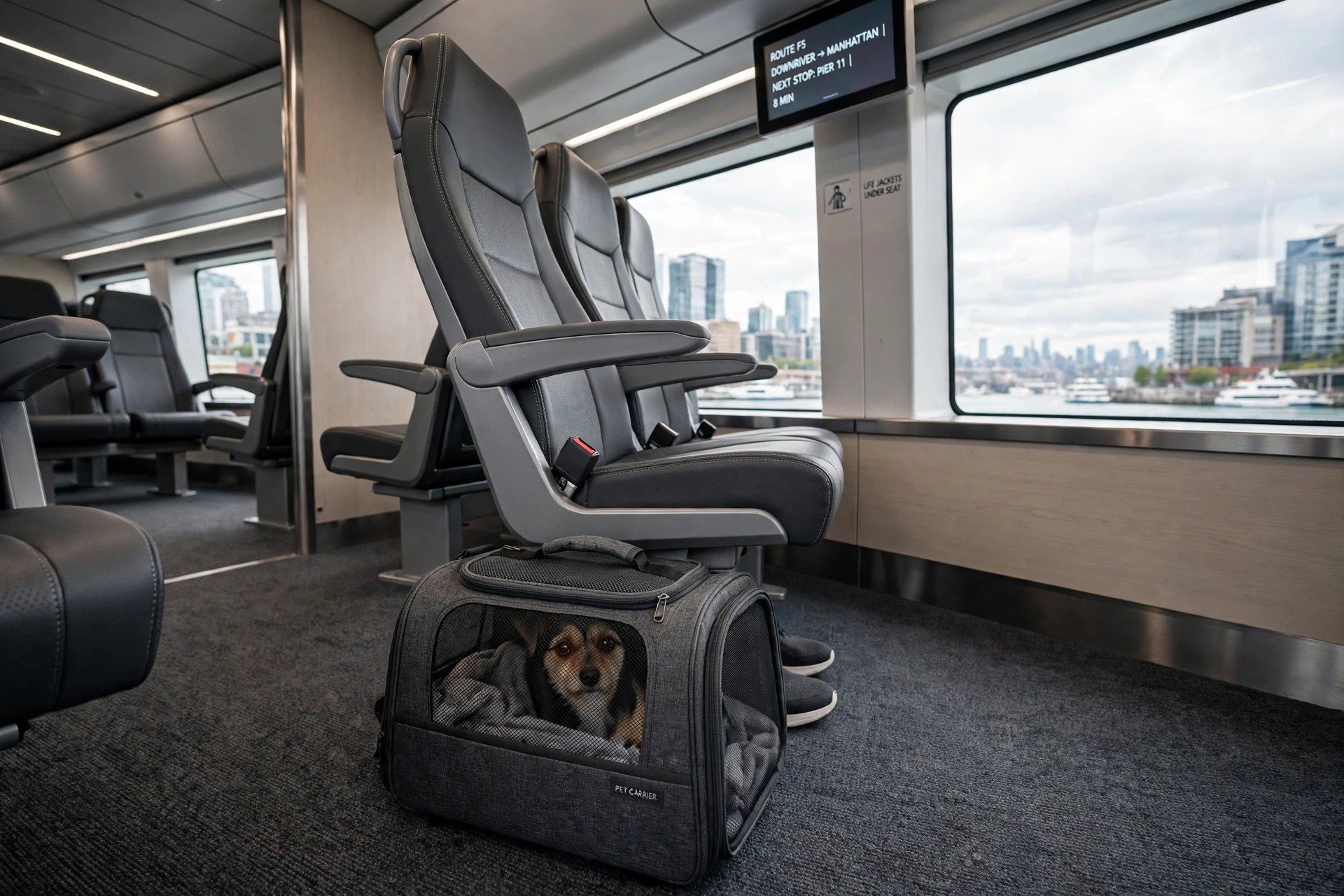
Some ferries keep dogs in a pet lounge or on a pet deck. Others offer on-board kennels with set visiting times. A few routes require pets to stay in a vehicle — know that long before you drive on board.
Pick your spot with your dog in mind. A seat near a busy doorway means constant foot traffic; a quieter corner away from food counters often settles a small dog faster. Note where deck access is allowed — pet areas are usually marked, food areas usually off limits.
What to pack in your hand luggage
Keep it short. You don’t need a suitcase for your dog — just the basics within reach for the whole crossing.
- Water and a collapsible bowl
- A few familiar treats and a small portion of regular food
- Poop bags, wipes, and a spare pad for the carrier
- A short leash and a backup ID tag
- Any medication, plus a copy of vaccination records if your operator asks for them
- A worn T-shirt or small blanket that smells like home
Skip strong-smelling food. Your neighbors will thank you. So will your dog, honestly — rich new treats on a moving ferry are a recipe for an upset stomach.
Feed a normal meal a few hours before you leave, not right before boarding. A dog that isn’t stuffed or starving travels better. Offer water little and often instead of one big drink.
How do you keep a small dog calm and comfortable during the crossing?
Keep your dog in the carrier where the rules require it, keep your routine steady, and keep your own voice low and boring. Settle the carrier by your feet or in the pet area as directed, drape a light blanket over part of it if that helps your dog switch off, and offer water during quiet moments. Most small dogs do best when nothing exciting happens at all.
That last line is the whole secret. Boring is good. Boring means safe to your dog.
Don’t keep opening the carrier to check. Each peek tells your dog something might be wrong. A quick glance is fine. Hovering isn’t.
If your dog whines a little at the start, wait. Engine vibration, new smells, and the motion of the water can take a few minutes to feel normal. Many dogs quiet down once the ferry settles into a steady rhythm.
Pick quiet toys — a soft chew or a lick mat, never a squeaker. Watch your dog’s body, not the clock: panting, drooling, lip licking, or scratching at the carrier means your dog needs water, fresh air on the pet deck if allowed, or a calmer spot.
Deck breaks, toilets, and longer crossings
Give your dog a proper toilet break before you board. Walk a little. Let sniffing happen. A rushed thirty-second stop rarely does the job.
On longer crossings, use the pet relief or pet deck area if the ferry provides one. Not every ferry has one, so check in advance.
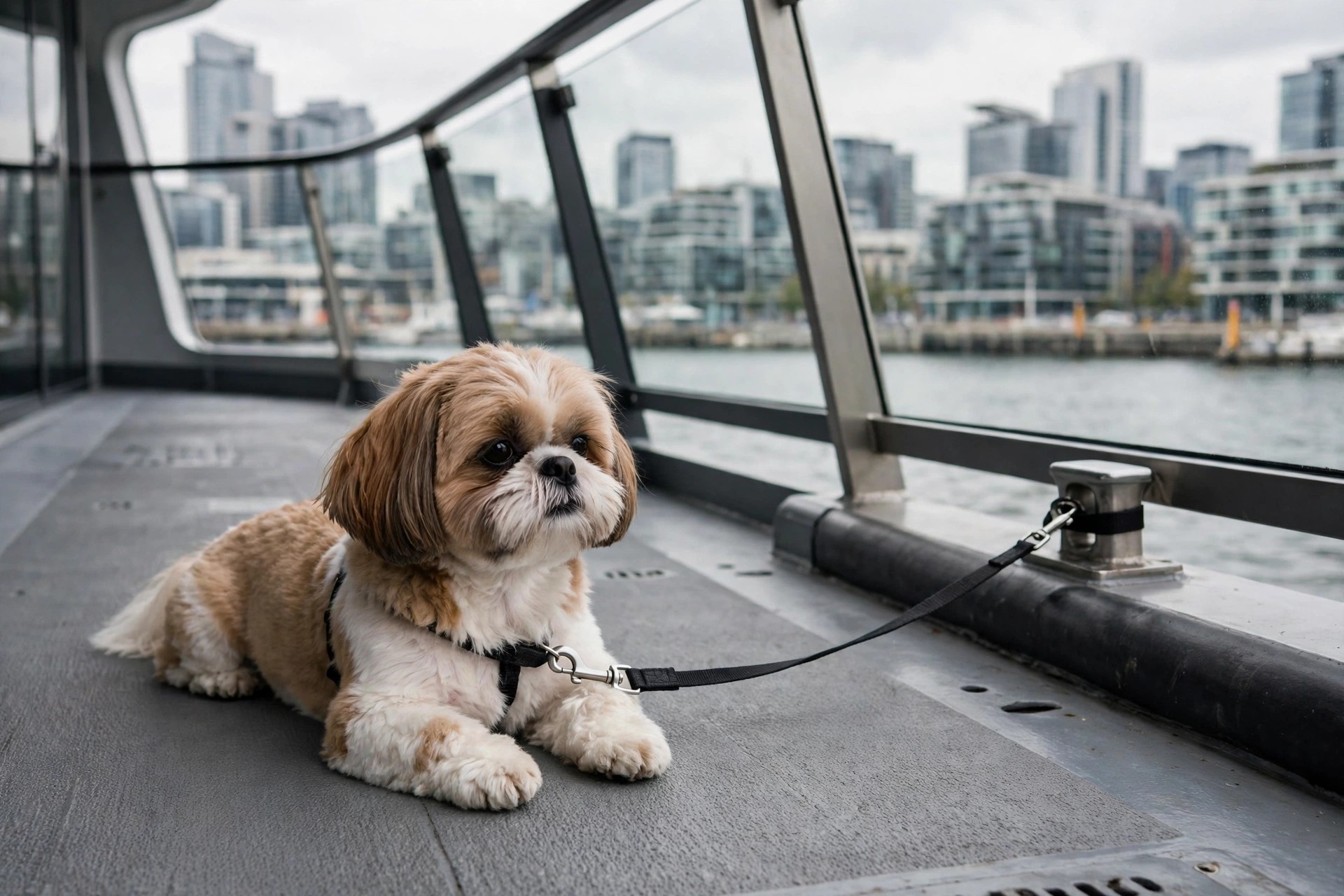
Never let your dog off the leash on deck. Decks can be windy, wet in spots, and full of gaps, chains, and edges. Short leash, close to you, every time — and skip the outer deck in rough weather.
If no break area works, a spare absorbent pad in the carrier is your backup. Change it as soon as you can. Your dog will relax more in a clean, dry space.
At the terminal: small habits that help
Arrive with time to spare. A calm walk to check-in beats a sprint.
Hold the carrier level when you lift it, especially on the gangway. Tilting scares some dogs more than the noise does. Two hands under the base, smooth and slow.
Keep your dog in the carrier while you wait, unless the terminal has a clear pet relief area. Curious strangers will ask to pet your dog. It’s fine to say, “Not today, we’re training.” Short and polite works.
Kids can rush in fast. Step between, smile, and protect your dog’s space. When you board, let the rush pass if you can — fewer bags will swing past your dog’s face on the ramp.
Questions sailors ask before the first crossing
Does my small dog have to stay in a kennel on a ferry?
It depends on the operator and the route. Some ferries keep dogs with their owners in a carrier in a pet area, some provide on-board kennels, and some require pets to stay in a vehicle. Rules differ by operator and country — check yours before you book so you know which setup you’re preparing for.
Does my dog need a separate ticket for a ferry?
Sometimes. Some operators charge a pet fare, some let small dogs in carriers travel free, and some require you to add the pet during booking. You’ll find the answer in the operator’s pet policy — check it before you pay, not at the terminal.
What if my dog feels sick or gets anxious on board?
Stay calm and keep your voice low. Cover part of the carrier with a light blanket, offer small sips of water, and avoid a big meal during the crossing. If your dog stays distressed, ask staff about a quieter pet area or a short deck break where that’s allowed, and talk to your vet before the next trip about motion sickness.
Can I walk my dog on deck during the crossing?
Only where the operator allows it, and only in the marked pet areas. Many ferries limit dogs to a set pet deck on a short leash, and food areas and outer decks in rough weather are usually off limits. Follow the crew’s directions on board — they know that ship’s rules best.
Key takeaways
Start carrier practice early, and keep it boring. Confirm the pet rules, kennel or pet-area setup, and ticket needs with your operator before you book, since they vary a lot. Pack water, cleanup basics, and something that smells like home. Then do less on board, not more — a settled dog in a familiar carrier, left mostly in peace, is the goal of every good ferry crossing with a small dog.
This article was created with AI assistance and reviewed by our editorial team before publishing.
 Moving to the USA With Your Dog: The Full Prep Timeline
 Travelling With a Guinea Pig: Carrier, Food, Calm Trips
 Booking a “Pet-Friendly” Stay? What to Check Before You Pay